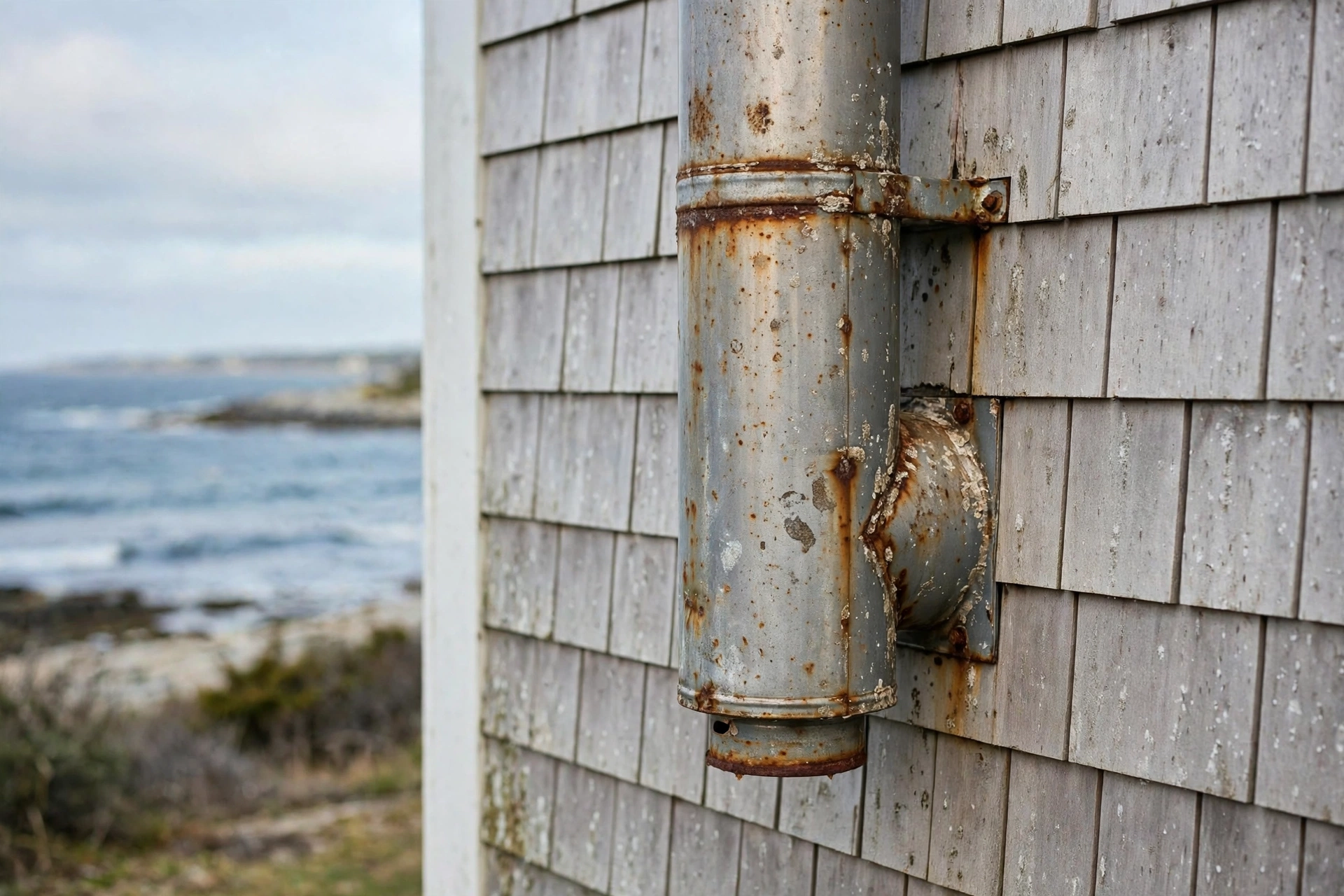
Why Delawares Coastal Air Wears Out Furnaces Faster
Coastal salt air accelerates rust and corrosion on furnace metal parts, and year-round Delaware humidity adds …
Learn more
Turning the heat on for the first time in fall and catching a burning smell is a common Delaware homeowner experience, and it is usually nothing to worry about. Dust settles on heat exchangers and burners during the months the furnace sits idle, and the first heating cycles burn that dust off, producing a brief smell that fades on its own.
Not every burning smell is dust, though. Electrical problems, overheating parts, and gas issues can all produce smells that look similar at first but mean very different things. Knowing how to tell them apart, and knowing which ones demand immediate action, keeps a minor annoyance from becoming a safety problem.
This guide describes the common furnace smells, what each one usually means, and what to do about it. The most important rule is simple: if you ever smell gas, or something like rotten eggs, leave the house right away and call for help from outside. Do not try to find the source yourself.
Dust burn off is the most common furnace smell, and it has a recognizable pattern. It appears during the first heating cycles of the season, smells like burning dust, and fades within a short time as the accumulated dust burns away. Opening a window briefly and letting the system run usually clears it, and it should not return in later cycles.
A fresh filter helps reduce dust burn off, since less dust reaches the furnace in the first place. If the smell is mild and follows this pattern, there is no need for alarm. If it lingers for days, grows stronger, or returns every time the furnace runs, something beyond dust is going on and the sections below apply.
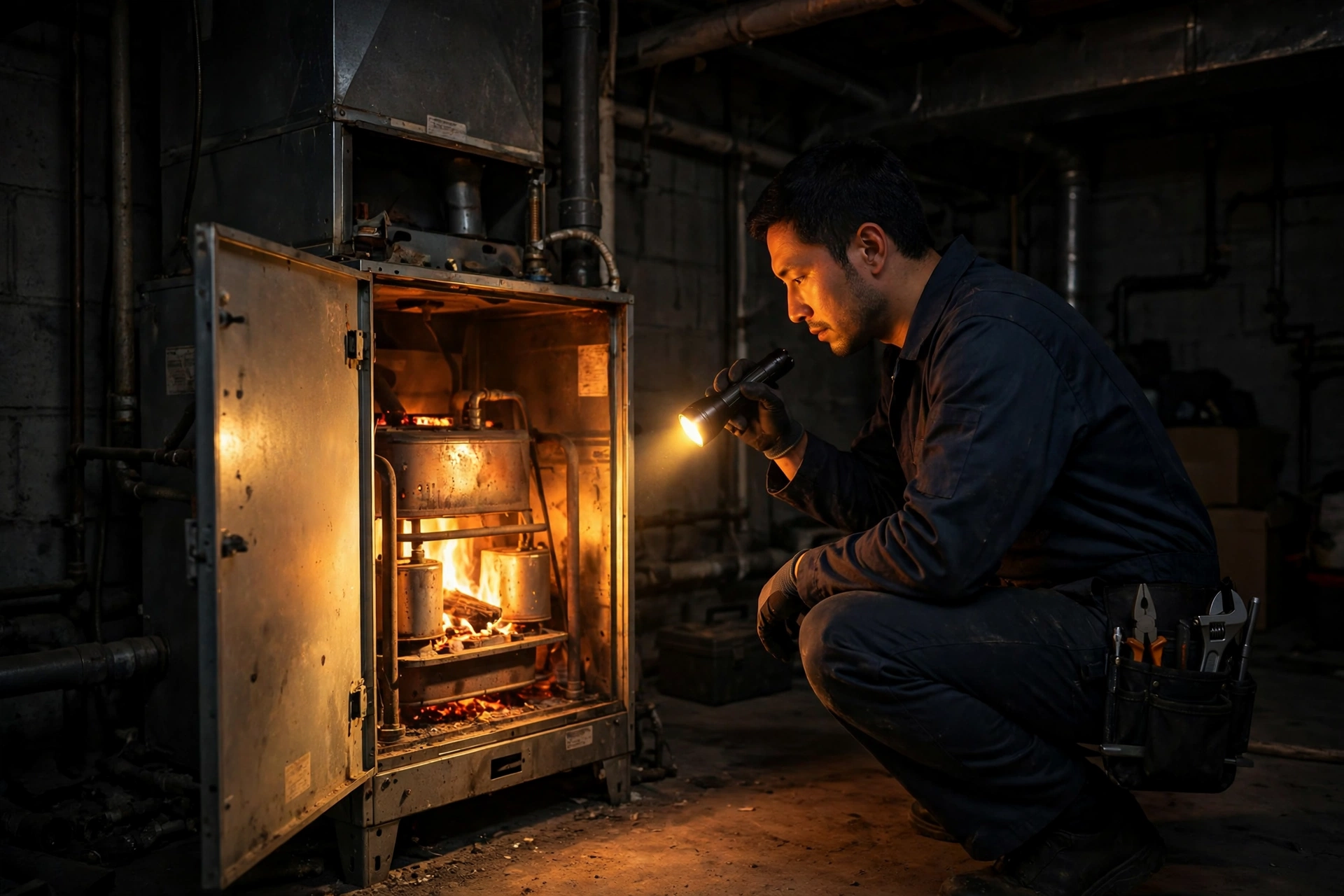
A burning smell that persists past the first cycles deserves attention. It may mean dust has built up inside the system beyond the heat exchanger, a filter is clogged and causing overheating, or a component is running hotter than it should. Start by checking the filter and replacing it if it looks blocked, since restricted airflow is a common cause of overheating smells.
If a fresh filter does not help, or if the smell is accompanied by the furnace shutting off unexpectedly, call a professional. Continued overheating can damage parts and, in serious cases, create safety risks. A technician can open the system safely, find the overheating part, and fix the airflow problem behind it.
An electrical burning smell is sharper and more acrid than dust, often compared to burning plastic or wire insulation. It can signal an overheating motor, a failing electrical connection, or a control board problem. These faults can worsen quickly, and they sometimes come with flickering lights, a tripped breaker, or a furnace that stops and starts unpredictably.
If you notice an electrical smell, turn the furnace off at the thermostat and the furnace switch, and call a professional. Do not keep running the system to see if the smell fades, and do not open the furnace cabinet to look for the source. Electrical faults inside a furnace are a technician job, and shutting the system down is the safe move while you wait.
Natural gas is odorless on its own, so utilities add a chemical that smells like rotten eggs to make leaks detectable. If you notice that smell near your furnace or anywhere in the house, treat it as an emergency. Leave the house immediately, taking everyone with you, and do not switch lights or appliances on or off on your way out, since a spark could ignite gas.
From a safe distance outside, call for help and report a suspected gas leak. Do not re-enter the house until professionals confirm it is safe, and do not try to locate the leak or relight the furnace yourself. Gas leaks are rare, but the response must be immediate and complete every single time, without exception.
Not every furnace smell is burning. A musty smell when the heat runs often comes from dampness in the ductwork or from a dirty filter and coils that have collected moisture over a humid Delaware summer. Basements and crawl spaces are common sources, since humid air in those spaces can feed mustiness through the whole system.
A fresh filter and a check for dampness around the furnace and duct connections are good first steps. If the musty smell persists, duct cleaning or moisture control in the lower levels of the home may be needed, and a technician can advise on what is actually causing it. Persistent dampness is worth addressing for the health of the house as well as the heating system.
When you call about a furnace smell, details help enormously. Note when the smell started, whether it appears at startup or throughout the cycle, what it smells like in your own words, and whether anything else changed at the same time, such as a tripped breaker or a new noise. A short log turns a vague complaint into a useful diagnostic starting point.
Also note what you have already tried, such as changing the filter or turning the system off, and whether the smell changed afterward. Technicians appreciate homeowners who can describe a problem clearly, and a good description often leads to a faster, more accurate repair. When in doubt about any smell, calling sooner is always better than waiting to see if it goes away.
A burning smell can also appear after repair work or a new furnace installation, and it has its own explanation. New parts, fresh paint on a cabinet, or coatings on a new heat exchanger can give off a smell during the first heating cycles as materials cure and settle. This smell is usually mild, fades within a few cycles, and follows the same pattern as dust burn off: it appears at startup, weakens steadily, and does not return.
The same caution rules still apply. If a post-repair smell lingers, grows stronger, smells electrical or like gas, or comes with a furnace that behaves oddly, treat it like any other warning smell and call the technician who did the work. A reputable technician will want to know, since a persistent smell after service can signal a part seated incorrectly or a connection that needs attention. Never assume a smell is normal just because work was recently done; the timeline is a clue, not a guarantee.
New equipment can also produce smells unrelated to the furnace itself, such as paint, adhesives, or dust disturbed during installation settling on warm surfaces. These smells usually fade quickly and do not return, much like dust burn off. The distinction that matters is persistence and character: a mild smell that weakens steadily over a few cycles is consistent with new materials settling in, while a smell that strengthens, smells sharp or electrical, or appears alongside tripped breakers or odd noises is not. When the pattern does not fit the harmless explanation, calling back promptly protects both the new equipment and the household, and it gives the installer a chance to correct a small issue before it grows.
Read the guide, then describe your furnace problem and we will help arrange the next step.
Coastal salt air accelerates rust and corrosion on furnace metal parts, and year-round Delaware humidity adds …
Learn more
A furnace often blows cold air briefly at startup while the heat exchanger warms up, but steady cold air usual…
Learn more
Gas furnaces tend to deliver hotter air and recover faster during Delaware cold snaps, while electric furnaces…
Learn more