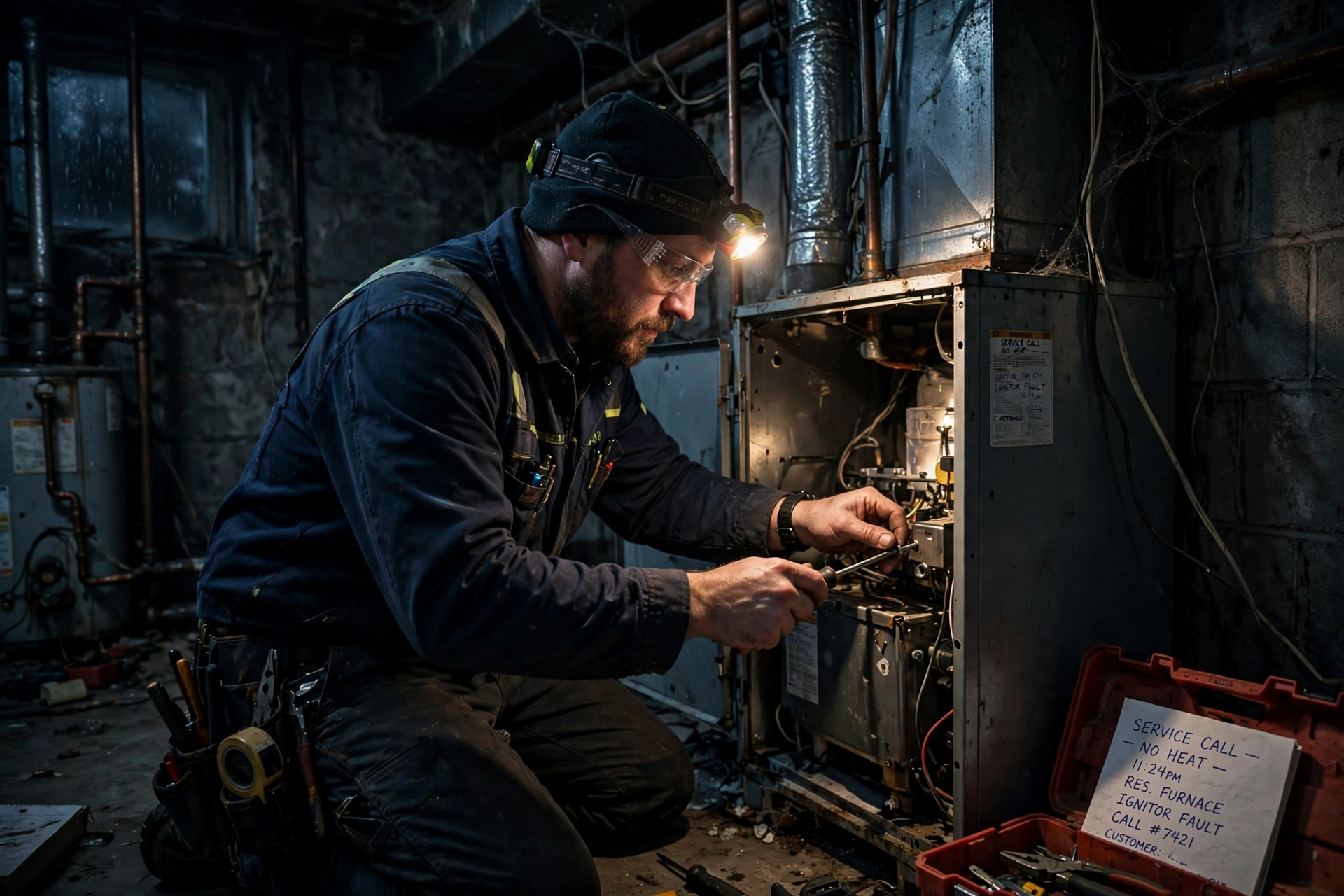
Emergency Furnace Repair
Emergency furnace repair covers a furnace that has stopped heating, is making unsafe sounds, or is showing sig…
Learn moreEvery furnace reaches a point where the honest question changes from how to fix it to whether fixing it is still wise. That point rarely arrives with a single dramatic failure. More often it arrives gradually: a repair in one winter, another the next, rooms that never warm properly, a system that runs longer and louder to do the same job, and a growing sense that the furnace is being kept going rather than genuinely serving the home.
Delaware conditions shape that timeline. Older homes in Wilmington and Newark often carry furnaces installed decades ago, coastal homes face salt air that corrodes components, and freeze and thaw cycles stress systems that already run hard through winter. A furnace that was reliable for years can enter a phase where each repair buys less time than the last, and recognizing that phase early gives you choices that a midwinter breakdown does not.
This page helps you judge when replacement is the sensible path, what the replacement process involves, and how to choose a new system without pressure or confusion. Replacement is a significant decision, and it deserves clear information, honest tradeoffs, and time to decide, not a rushed sale during an emergency visit.
Frequency of repairs is the clearest signal. One repair in a season is normal wear. Two or three major repairs across consecutive seasons, especially involving different components, suggests the system as a whole is wearing out rather than suffering isolated faults. When a technician starts finding new wear at every visit, the furnace is telling a consistent story about its condition.
Heating performance tells the next part of the story. A furnace that leaves some rooms cold, struggles on the coldest nights, or needs the thermostat set higher each year to achieve the same comfort is losing capacity or efficiency. That decline is not always visible on a single visit, but homeowners notice it over seasons, and it usually worsens rather than stabilizes.
Physical condition matters too. Visible rust, corrosion on venting or internal components, soot marks, or a cracked heat exchanger all point toward replacement rather than another repair. Safety findings in particular should not be negotiated around. A furnace that cannot be made safe is a furnace that should be replaced, regardless of how well it otherwise seems to run.

Repair is the right choice when a furnace is otherwise sound, the fault is a common wear item, and the system has a record of reliable service. A new ignitor, sensor, capacitor, or thermostat on a well maintained furnace is a sensible investment that should return seasons of dependable heat. Replacement in that situation would spend far more to solve a problem that a repair already solves.
Replacement becomes sensible when the math and the reliability picture both point the same way. If repair costs are mounting, if the furnace is old and showing wear across multiple components, or if a safety issue cannot be repaired, replacement stops being an expense and becomes a reset: a new system, a new reliability horizon, and a chance to correct sizing or duct problems that the old installation carried for years.
The comparison should also consider comfort, not just function. A home that has lived with uneven heat, noisy operation, or a furnace that cannot keep up on cold nights gains something real from replacement that a repair cannot deliver. Conversely, a home that is comfortable and only needs an occasional part should not be pushed toward replacement. A trustworthy assessment weighs both sides and leaves the decision with you.
The best time to plan a replacement is while the old furnace still runs. Planning ahead lets you compare system options calmly, schedule installation in mild weather, address ductwork or venting improvements without urgency, and avoid the premium pressure of a midwinter breakdown. Many homeowners start the conversation after a repair visit reveals wear, and that timing is ideal: the system is still heating, but its condition is now documented.
Planning also means thinking about the home as it is now, not as it was when the old furnace was installed. Additions, insulation upgrades, window replacements, and changes in how rooms are used all affect sizing, and a replacement is the moment to correct a system that was sized for a different version of the house. A technician who measures and inspects the current home will size the new system for the home you live in today.
If your furnace fails completely before you have planned a replacement, the process still follows the same careful steps, just on a faster timeline. Emergency heat restoration comes first where possible, and then the replacement conversation happens with the same information and options, not as a rushed decision in a cold house. You should never feel forced into a system choice you do not understand.
Replacement begins with assessment: measuring the home, inspecting ductwork and venting, checking gas and electrical supply, and discussing how the home heats today, including rooms that have always been troublesome. That assessment produces a system recommendation with reasons, covering capacity, fuel type, staging, and any duct or venting work that should accompany the new unit.
On installation day, the old furnace is disconnected safely and removed, the new unit is set, leveled, and connected to ductwork, fuel, venting, and drainage, and the thermostat is configured for the new system. Commissioning follows, with airflow, safety controls, and heating cycles tested across several runs. The installer should walk you through filter changes, thermostat operation, and normal sounds, so the new system feels familiar from the first night.
After installation, a good replacement includes a check on the rooms that were problematic before. If a cold bedroom or a chilly addition drove part of the replacement decision, those rooms deserve a specific follow up check to confirm the new system actually solved the problem. Replacement is only successful when the whole home feels the improvement, not just the rooms that were already comfortable.
The most expensive furnace is not automatically the best furnace for your home. Staged and modulating heat, higher efficiency ratings, and advanced controls all deliver real benefits, but their value depends on your home size, heating load, ductwork, and how long you plan to stay in the home. A smaller, well insulated home may gain little from the most advanced unit, while a large, older home that heats heavily all winter may benefit greatly from it.
A sensible approach is to compare a small number of well matched options rather than a long list of every available model. Each option should be explained in terms of comfort, reliability, and running characteristics you can actually feel: steadier temperatures, quieter operation, and even heat across rooms. Efficiency should be discussed as part of that picture, grounded in your actual winter heating pattern rather than abstract claims.
Beware of replacement advice that skips the home assessment. A recommendation made without measuring the home, inspecting ductwork, or asking about trouble rooms is a guess, not a plan. The right system for your neighbor's house may be the wrong system for yours, and a careful installer will say so plainly rather than selling the same unit to every home.
A new furnace should change how you think about heating: from managing breakdowns to simply enjoying steady comfort. That shift lasts when maintenance starts immediately. Annual tune-ups, regular filter changes, and prompt attention to new sounds or uneven rooms keep a new system in the condition it was installed in, and they protect the reliability horizon that justified the replacement in the first place.
Set realistic expectations for the first season. A properly sized new system may run longer at lower output than an older single stage unit, especially if it stages its heat, and that longer, gentler running is normal and desirable. Rooms should feel steadier, startup should be quieter, and the system should hold temperature through cold snaps without the strain you grew used to with the old unit.
Keep the replacement record, including what was installed and why it was sized as it was, for future service visits. That record helps technicians maintain the system correctly and makes any future upgrade conversation straightforward. Replacement is a fresh start for your home heating, and treating it that way, with maintenance from day one, is how that fresh start lasts.
Describe what your system is doing and we will help arrange the next step.
Consider replacement when repairs are frequent, several major parts fail in the same period, heating stays uneven despite repairs, or a safety issue such as a cracked heat exchanger is found.
Often yes, especially when replacement is paired with duct or airflow improvements. A new system sized to the current home, with ductwork checked, has the best chance of solving long standing cold rooms.
Planning while the old furnace still runs is better, because you can compare options calmly and schedule installation in mild weather. A midwinter failure forces the same decision under pressure.
Not necessarily. Homes change over time, so sizing should be based on the home as it is today, including insulation, windows, additions, and ductwork condition.
The old unit is disconnected safely and removed from your home as part of the job, so you do not need to arrange disposal yourself.
Change filters regularly, schedule an annual tune-up before heating season, keep the furnace area clear and dry, and report new sounds or uneven heating promptly.
Not seeing your question? Request service and describe what your system is doing.
Plan a Furnace ReplacementEmergency furnace repair covers a furnace that has stopped heating, is making unsafe sounds, or is showing sig…
Learn more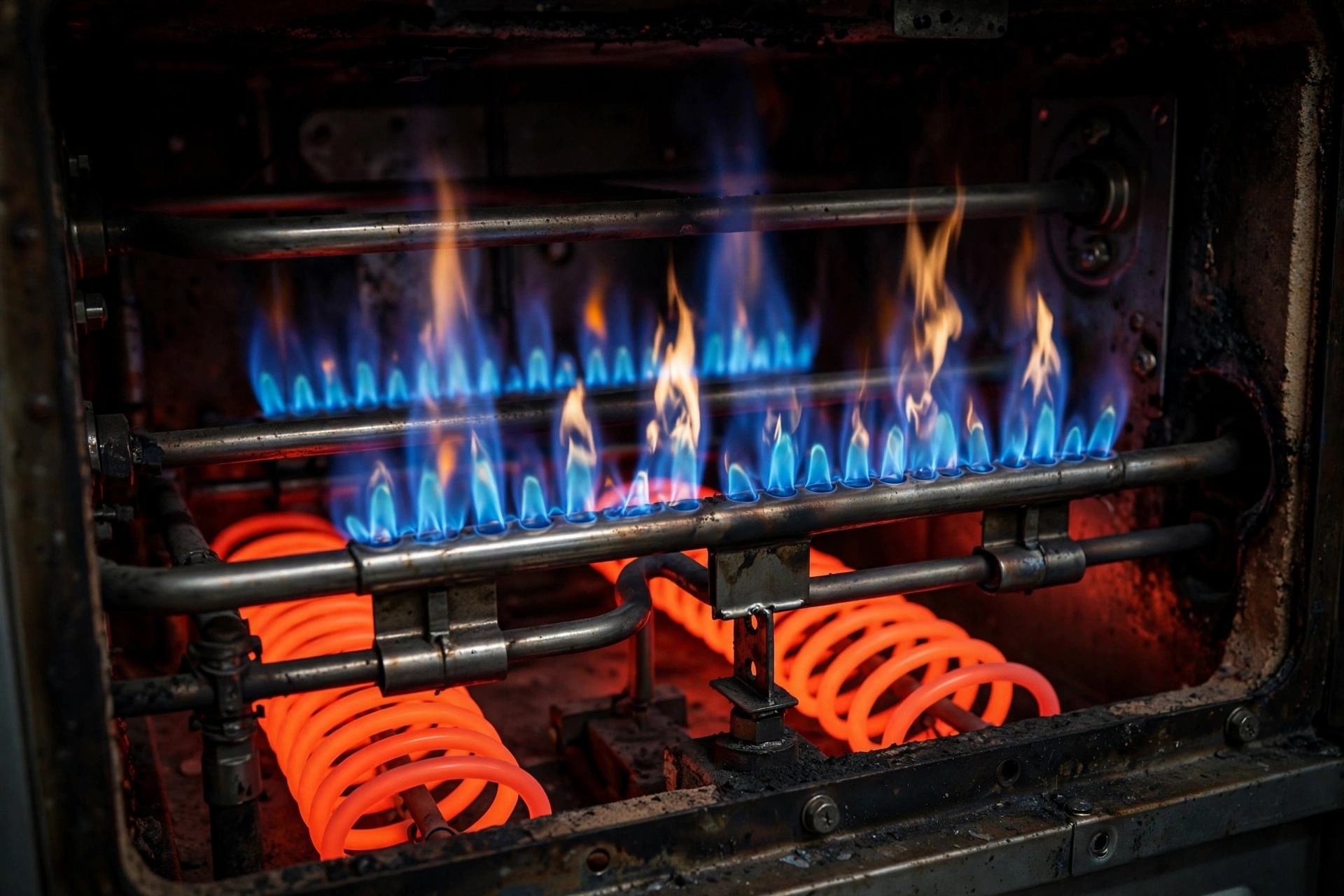
Furnace repair restores safe, even heat by diagnosing the failed part or control, explaining the fault in plai…
Learn more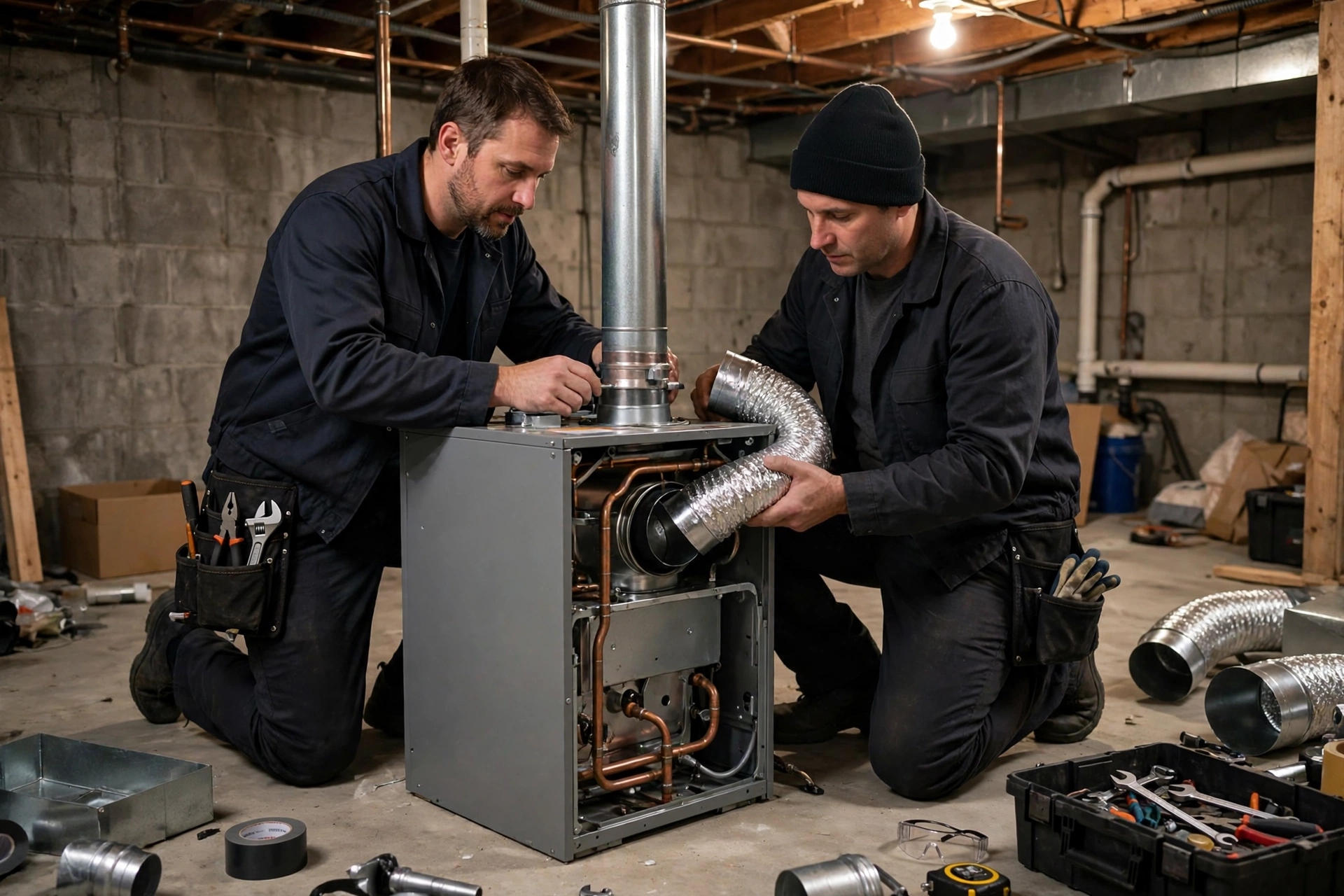
Furnace installation means choosing a system sized to your home and ductwork, removing the old unit safely, an…
Learn more