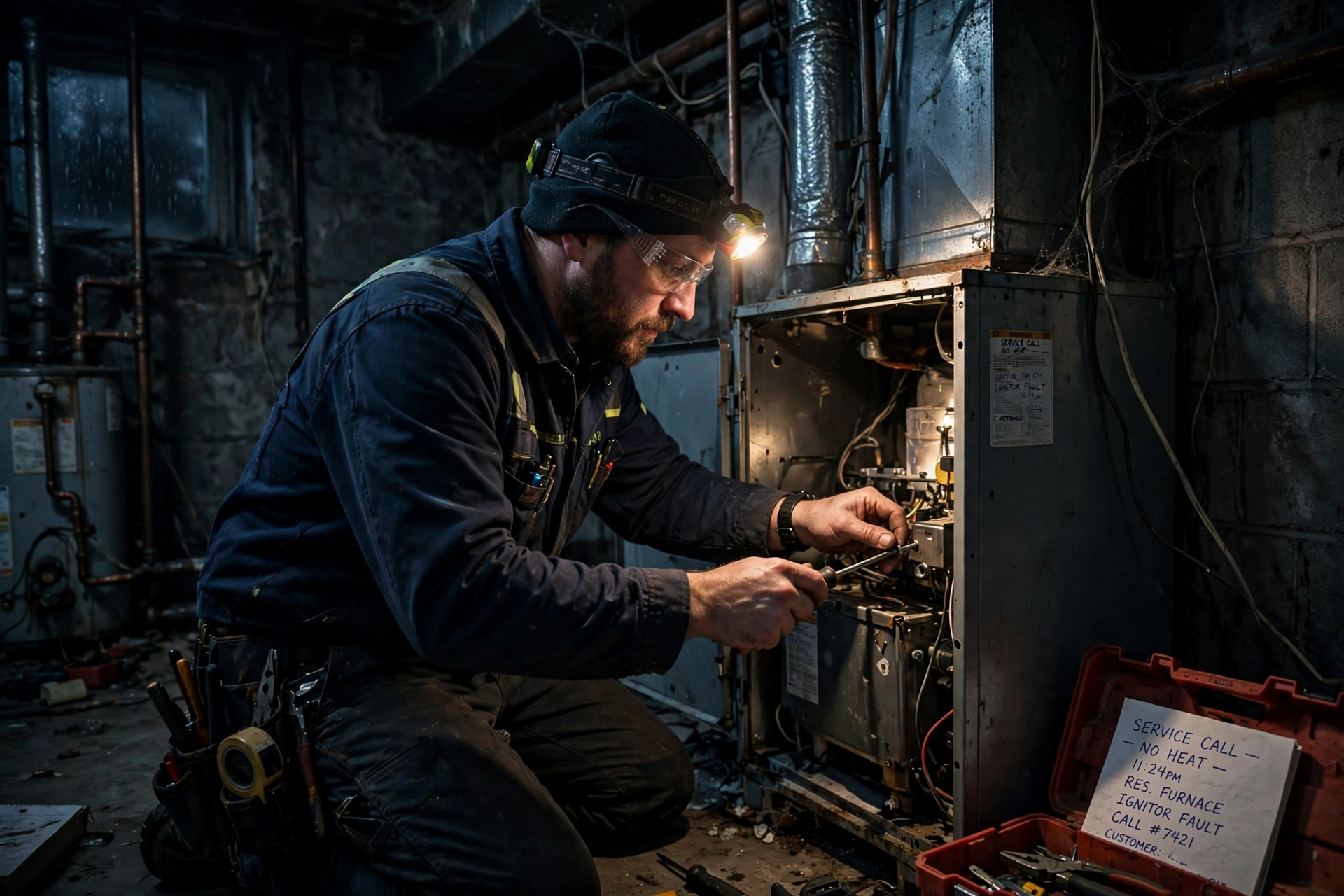
Emergency Furnace Repair
Emergency furnace repair covers a furnace that has stopped heating, is making unsafe sounds, or is showing sig…
Learn moreA heat pump is the hardest working heating system in many Delaware homes because it never gets a season off. It cools through humid Delaware summers, heats through winter, and switches between modes as weather changes, which means its compressor, refrigerant circuit, reversing valve, and outdoor unit accumulate wear all year rather than only in winter. When a heat pump falters, the symptom may appear in either mode, and diagnosis has to consider both.
Delaware climate is a particular test for heat pumps. Humid summers load the system with moisture removal as well as cooling, coastal salt air corrodes outdoor coils and connections, freeze and thaw cycles challenge defrost operation, and cold snaps push the system toward its heating limits. A heat pump that cools beautifully in July can still struggle in January, and a problem that looks like a heating fault may actually be a refrigerant or defrost issue that affects both modes.
This page covers how heat pumps fail, how diagnosis separates refrigerant, electrical, airflow, and defrost causes, what a repair visit involves, and how to keep a repaired heat pump running efficiently through both seasons. Whether your heat pump heats, cools, or does both poorly, the path to a fix starts with understanding the whole system.
Weak output is the most reported heat pump complaint, and it has several distinct causes that feel similar from inside the house. Low refrigerant reduces the system's ability to move heat in either direction, so both heating and cooling feel feeble. A dirty outdoor coil or indoor coil restricts heat transfer in the same way, leaving the system running longer to achieve less. A failing compressor, by contrast, may produce weak output alongside new noises or frequent shutdowns.
Airflow trouble mimics refrigerant trouble closely. A clogged filter, a dusty indoor coil, a struggling blower, or blocked registers all reduce the air a heat pump can condition, and the result is rooms that never quite reach temperature despite long run times. A technician separates airflow causes from refrigerant causes by measuring airflow, coil temperatures, and system pressures, rather than assuming the most expensive explanation first.
Thermostat and mode problems form a third category. A heat pump stuck in the wrong mode, a thermostat that cannot call for auxiliary heat when needed, or a reversing valve that fails to switch fully can leave the system blowing cool air in winter or warm air in summer. Those control faults are often straightforward repairs once identified, but they require testing in both modes to confirm the fix holds.
Some frost on an outdoor unit during winter heating is normal, and the defrost cycle exists to clear it. Trouble begins when frost builds into thick ice, when the unit stays iced over for long periods, or when defrost cycles run constantly without clearing the coil. Heavy icing blocks airflow through the outdoor coil, forces the system to work harder, and eventually leaves the home cold despite the unit running.
Defrost faults have several sources. A failed defrost sensor or control board may never trigger a defrost cycle, a reversing valve problem may prevent the cycle from reversing properly, and low refrigerant can cause excessive frost by changing coil temperatures. A technician distinguishes these by observing a defrost cycle, testing sensors and controls, and checking refrigerant charge, because each cause leads to a different repair.
Homeowners can help by keeping the outdoor unit clear of leaves, snow, ice buildup around its base, and vegetation crowding its sides, and by reporting icing promptly rather than waiting for it to clear on its own. Never chip ice off a heat pump coil with a hard tool, since coil fins damage easily and a damaged coil creates a larger repair. A technician can clear ice safely and find why it formed.
Short cycling, where a heat pump starts and stops in rapid bursts, wastes energy and wears the compressor, and it has causes on both the electrical and airflow sides. A clogged filter or restricted coil can overheat or overcool the system until a safety control shuts it down, a thermostat problem can send confused signals, and an electrical fault such as a failing capacitor can prevent the compressor from starting cleanly. Each cause produces a similar symptom, so testing separates them.
Noises narrow the diagnosis usefully. A grinding or screeching sound from the outdoor unit often points to a fan motor or bearing problem, a loud buzzing at startup can indicate a capacitor or contactor issue, and a hissing sound may suggest a refrigerant leak at a connection or valve. A heat pump that has always run quietly and suddenly develops a new sound deserves a prompt visit, because outdoor components exposed to Delaware weather degrade faster once a fault begins.
Vibration and rattling deserve attention too, particularly on outdoor units. Loose panels, a fan blade striking debris, or a compressor mounting problem can all rattle, and while some causes are simple, a compressor that vibrates excessively may be failing internally. A technician can distinguish a loose panel from a compressor problem quickly, and that distinction determines whether the repair is minor or major.
Refrigerant is not consumed by a heat pump, so a system that is low on refrigerant has a leak somewhere, and the repair involves finding and fixing that leak rather than simply refilling the system. Leaks commonly occur at connections, valves, or coils, and coastal salt air accelerates corrosion at outdoor connections in Delaware. A technician uses leak detection methods to locate the source, repairs it, and then charges the system to its correct level, because both undercharge and overcharge harm performance.
Electrical faults are the other major repair category. Capacitors, contactors, relays, and control boards all wear with cycling and weather exposure, and a failed capacitor is one of the most common reasons a heat pump hums without starting or starts only intermittently. Control board failures can produce confusing symptoms, such as a system that runs in the wrong mode or ignores thermostat commands, and diagnosis requires testing the board and its inputs rather than guessing at it.
Safety matters on both fronts. Refrigerant handling requires proper equipment and training, and electrical work on a heat pump involves high voltage components outdoors in all weather. Homeowners should not open outdoor unit panels, attempt refrigerant work, or bypass safety controls. Reporting symptoms accurately and leaving the technical work to a technician keeps the repair safe and effective.
A heat pump repair visit starts with the symptom story in both modes: whether heating, cooling, or both are affected, when the problem began, whether icing or noises appeared, and whether the system has needed resets. That history matters because a fault that affects only heating points differently from one that affects both modes, and a problem that began after a storm points differently from one that faded in gradually.
Testing covers the full system. The technician checks filters and airflow, indoor and outdoor coils, refrigerant pressures and temperatures, electrical components, thermostat communication, reversing valve operation, and defrost function. Where possible, the system is tested in both heating and cooling modes, because a repair confirmed in only one mode may still leave the other mode faulty, and Delaware homeowners need both.
You should receive a plain explanation of what failed and why, whether the repair addresses a single component or a pattern of wear, and what to watch after the repair. If refrigerant was involved, the explanation should include whether a leak was found and repaired, because a refill without a leak repair is a temporary fix. A good visit ends with the system tested in the mode you need most, and confidence that the other mode will work when its season arrives.
After a repair, routine care protects both modes. Change filters regularly, keep the outdoor unit clear of debris and vegetation, hose off the outdoor coil gently when it accumulates dirt if your technician advises it, and keep indoor vents open and unblocked. These simple habits support airflow and heat transfer, which are the foundations of heat pump efficiency in both seasons.
Annual maintenance for a heat pump is best scheduled before the season you rely on most, and many Delaware homeowners benefit from a visit that checks both heating and cooling functions together. That visit inspects coils, refrigerant, electrical components, defrost operation, and airflow, and it catches the slow wear that humid summers and cold winters impose on a system that never rests.
Pay attention to how the system behaves after repair: whether rooms reach temperature at similar rates, whether defrost cycles clear the outdoor coil, and whether new noises appear. A heat pump that runs steadily and quietly in both modes is a healthy one, and reporting changes early keeps repairs small. Year round systems reward year round attention, and the payoff is comfort in July and January alike.
Describe what your system is doing and we will help arrange the next step.
It may be in defrost mode briefly, low on refrigerant, stuck in the wrong mode, or failing to engage auxiliary heat. If cold air persists beyond a few minutes, request service for diagnosis.
Light frost that clears during defrost cycles is normal in winter. Thick ice that stays, or ice that keeps returning quickly, points to a defrost, refrigerant, or airflow problem.
No. Covering restricts airflow and traps moisture. Keep the unit clear of snow, leaves, and vegetation instead, and let defrost cycles operate normally.
Short cycling often comes from airflow restrictions, thermostat problems, or electrical faults such as a failing capacitor. Testing separates those causes before a repair is recommended.
No. Refrigerant is not consumed, so low refrigerant means a leak. The leak should be found and repaired, then the system charged to its correct level.
Modern heat pumps heat well through much of Delaware winter, with auxiliary heat supporting the coldest stretches. A system struggling in cold weather should be checked for refrigerant, defrost, and airflow issues.
Not seeing your question? Request service and describe what your system is doing.
Get Heat Pump Repair HelpEmergency furnace repair covers a furnace that has stopped heating, is making unsafe sounds, or is showing sig…
Learn more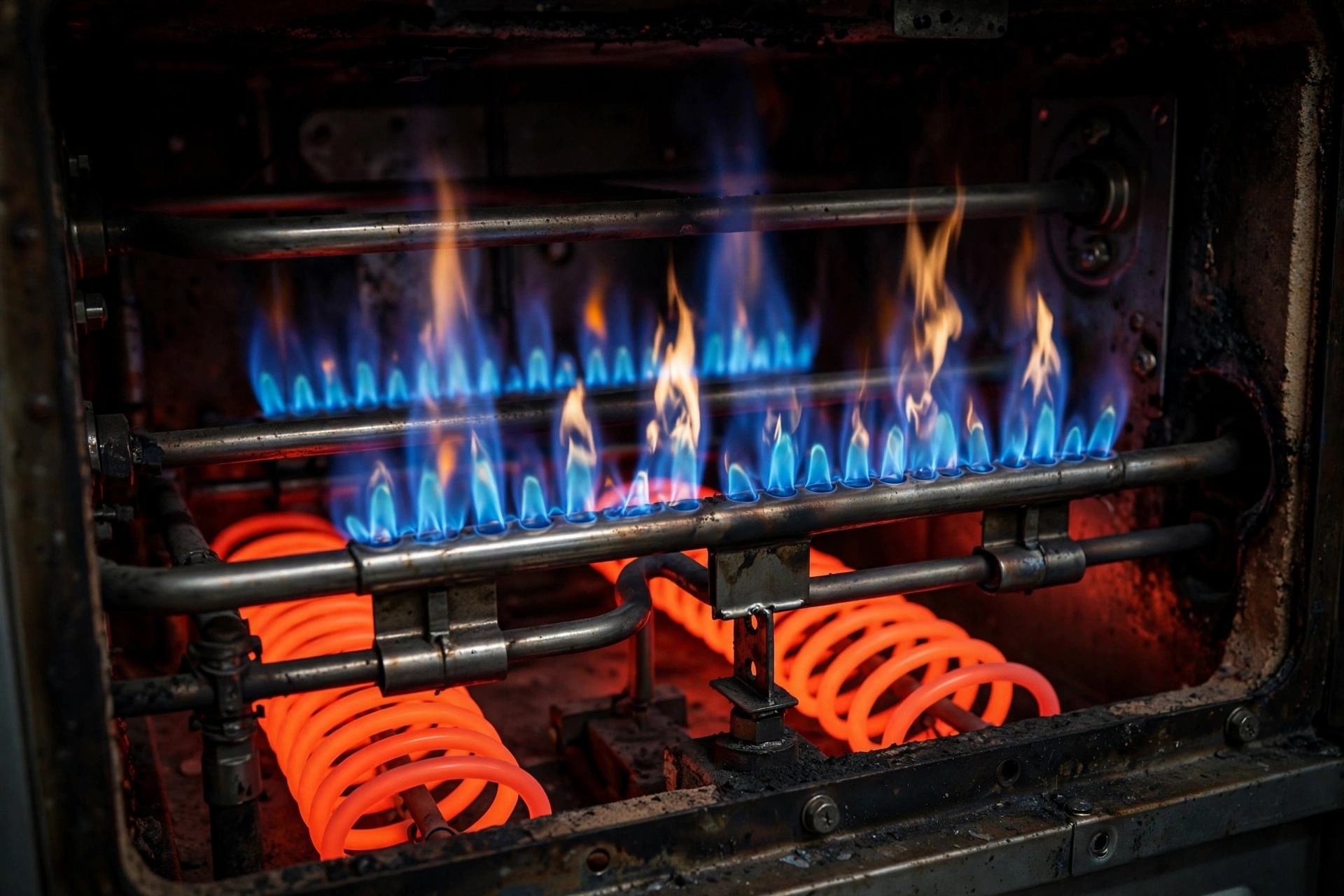
Furnace repair restores safe, even heat by diagnosing the failed part or control, explaining the fault in plai…
Learn more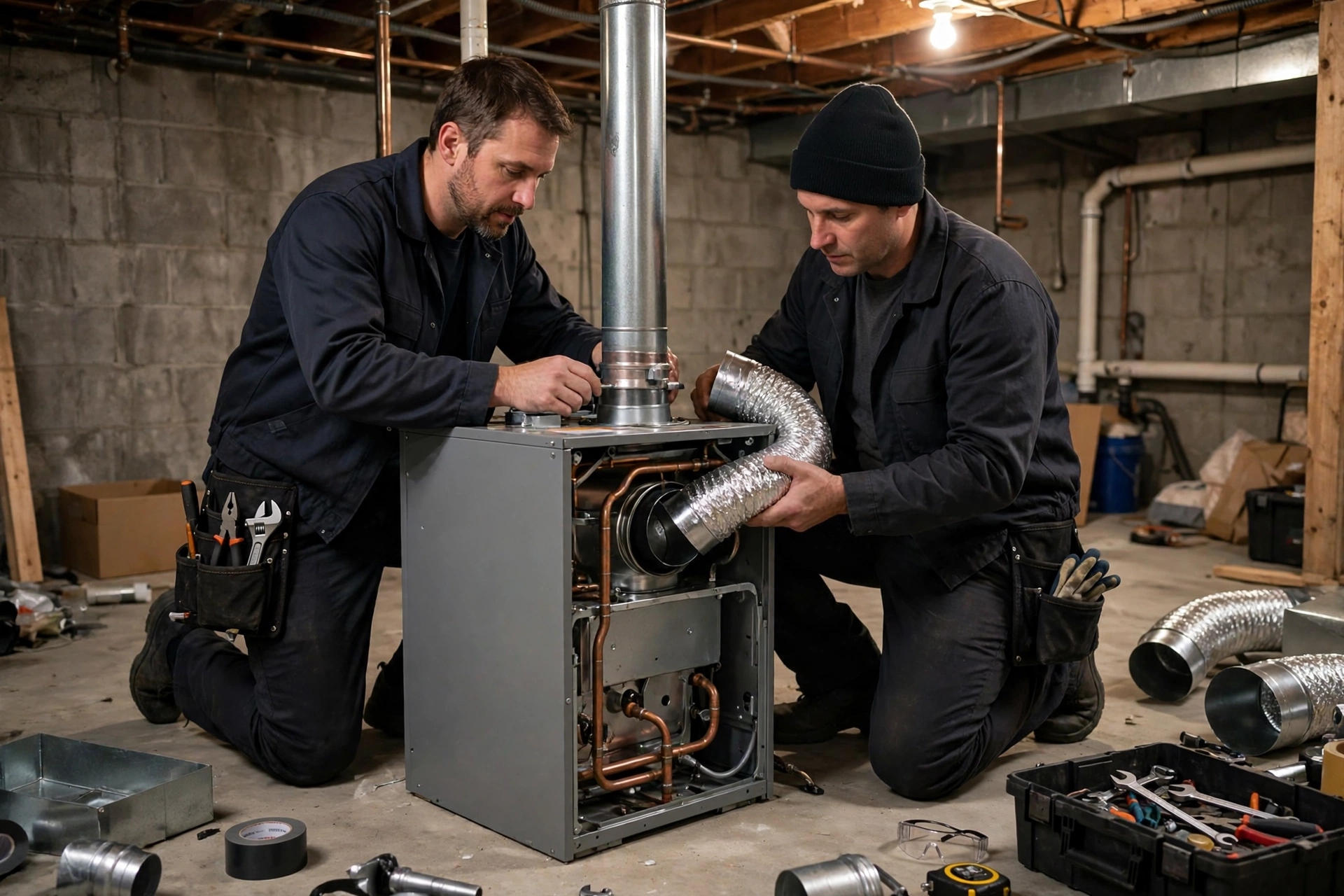
Furnace installation means choosing a system sized to your home and ductwork, removing the old unit safely, an…
Learn more