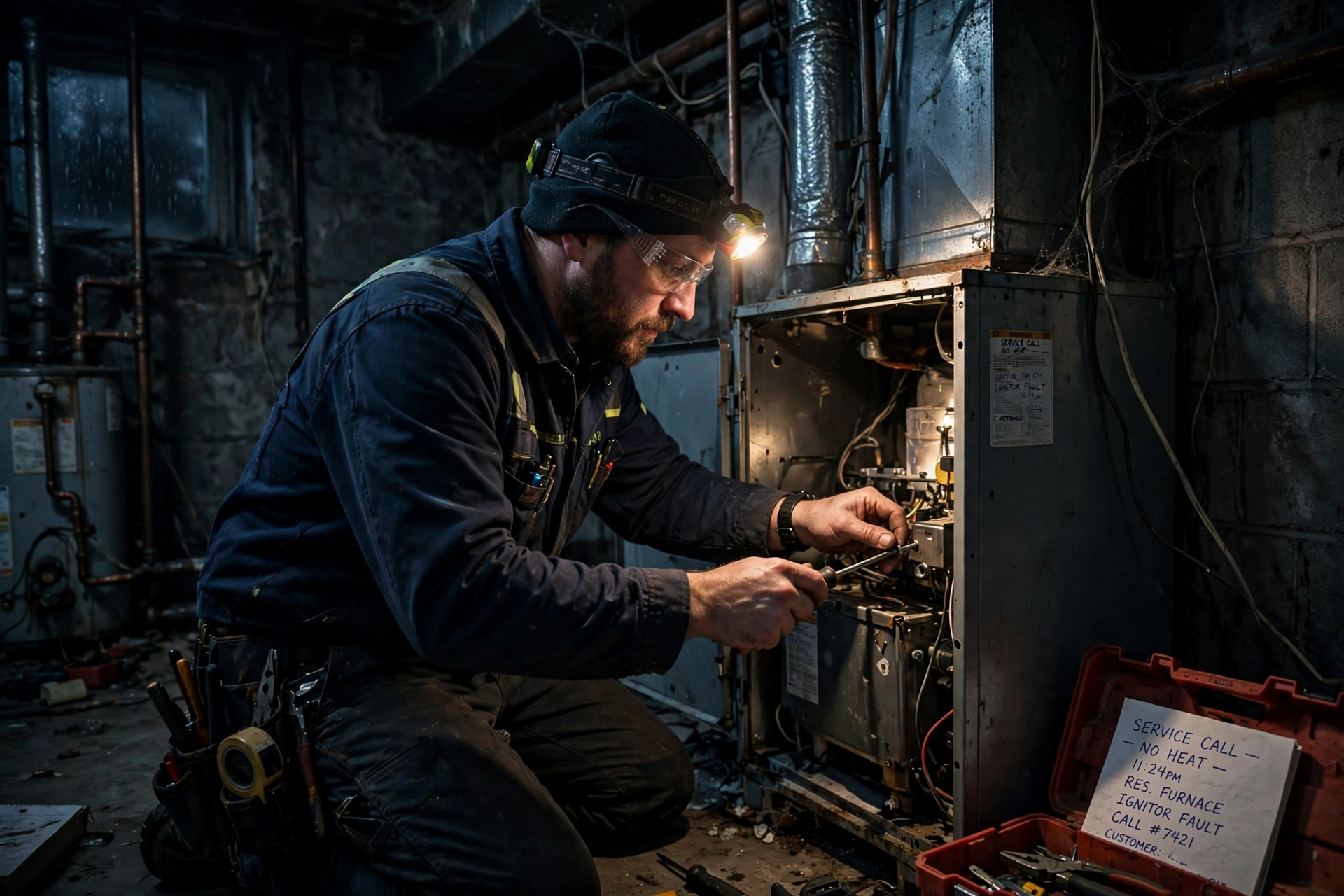
Emergency Furnace Repair
Emergency furnace repair covers a furnace that has stopped heating, is making unsafe sounds, or is showing sig…
Learn moreA furnace safety inspection answers a different question from a repair visit or a tune-up. Repair asks what is broken, tune-up asks what needs cleaning and adjusting, but a safety inspection asks a narrower and more important question: is this furnace safe to run in this home, tonight and through the winter? That focus makes it the right service when you have moved into a new home, when a furnace is aging, when something has changed around the system, or when you simply want certainty.
Safety risks from furnaces are real but largely invisible. A cracked heat exchanger can allow combustion gases into the air supply without any smell or visible sign, poor venting can spill those gases into living space, gas leaks can develop at connections that have not been touched in years, and electrical faults can overheat inside a cabinet you never open. None of those problems announce themselves clearly, which is why inspection by a trained technician matters more than reassurance from the fact that the furnace still produces heat.
Delaware homes add specific safety considerations. Older housing stock in Wilmington and Newark carries furnaces and venting installed under older standards, coastal humidity and salt air corrode venting and components, renovations sometimes alter vent routes or block combustion air, and freeze and thaw cycles stress vent joints and masonry chimneys. This page explains what a safety inspection covers, how findings are reported, and what happens when a problem is found.
The heat exchanger is the heart of furnace safety, because it separates combustion gases from the air your family breathes. A crack, hole, or severe corrosion in the heat exchanger can allow carbon monoxide and other combustion products into the supply air, and carbon monoxide is colorless and odorless, so a household may have no warning without detectors and inspection. Checking the heat exchanger is therefore the centerpiece of any safety inspection.
Inspection combines visual examination with testing. The technician looks for cracks, rust, soot patterns, and distortion, and tests combustion and airflow behavior for signs that exhaust gases are entering the supply stream. Where access allows, internal surfaces are examined directly, and where access is limited, indirect tests and careful observation of flame behavior and pressure changes help reveal problems that eyes alone cannot see.
A finding of heat exchanger damage is not a gray area. A cracked heat exchanger generally means the furnace should not run until it is repaired or replaced, and a technician should say that plainly rather than softening it. That directness protects the household, and it gives you a clear basis for deciding on repair versus replacement with full information about the risk involved.
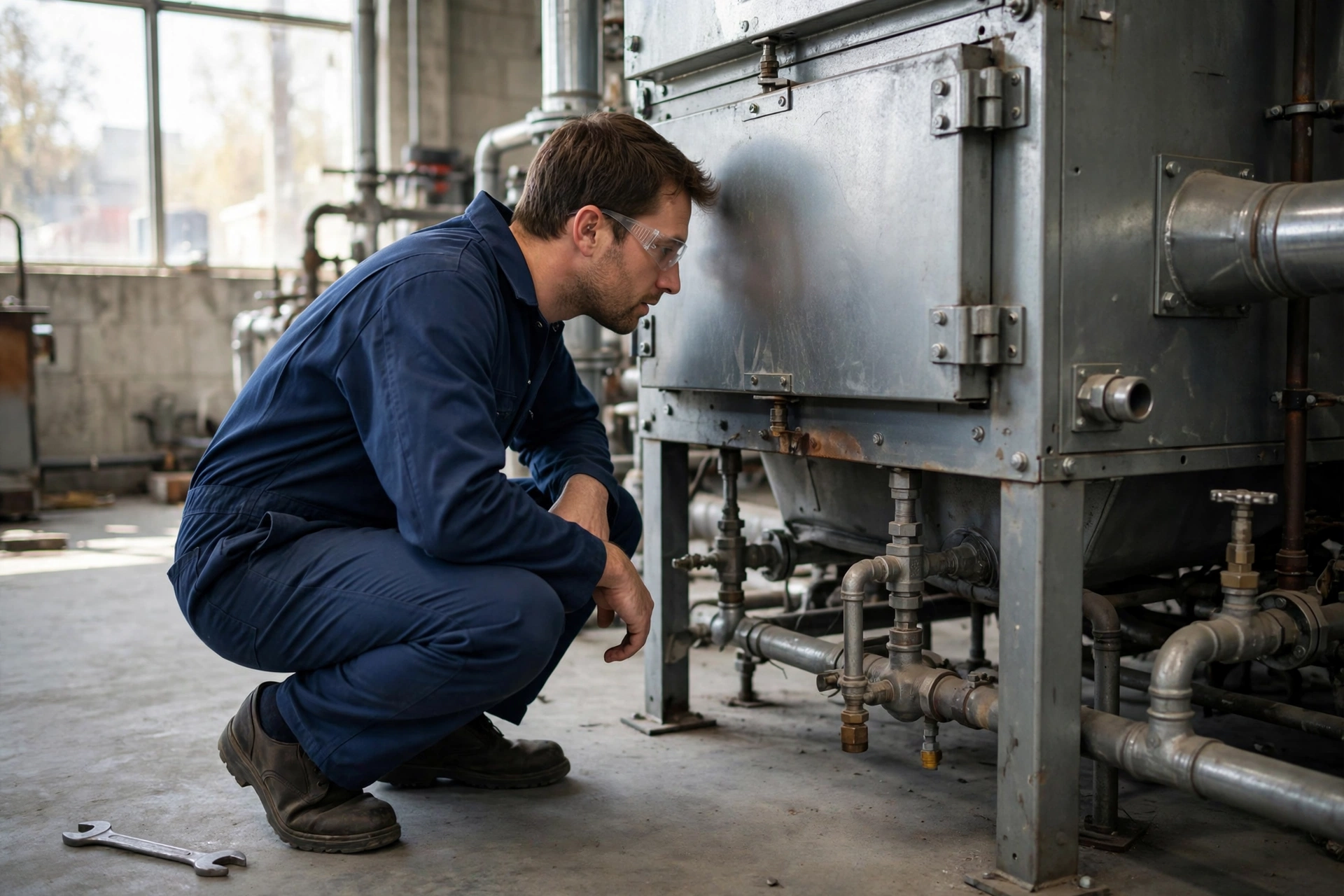
Venting carries combustion gases out of the home, and it must be intact, correctly routed, and properly connected from the furnace to its termination. A safety inspection checks vent joints for gaps, corrosion, and disconnections, verifies that vent slope and routing allow gases to exit rather than pool, and confirms that the termination is clear of obstructions such as nests, debris, or snow and ice buildup in winter.
Chimney vented furnaces deserve particular care in Delaware, where older masonry chimneys can deteriorate, liners can crack or collapse, and freeze and thaw cycles widen existing damage season by season. A deteriorated chimney liner can allow combustion gases to leak into the home or damage the masonry further, so the inspection notes chimney condition and recommends further evaluation where the chimney itself, rather than the furnace, is the concern.
Combustion air is the often overlooked partner of venting. A furnace needs a reliable supply of air for clean combustion, and renovations that seal a basement, add insulation, or enclose a furnace room can inadvertently starve the system of air. An inspection checks that combustion air pathways are open and adequate, because a furnace starved of air burns poorly, produces more carbon monoxide, and vents less reliably.
Gas connections are inspected for leaks, corrosion, and proper fitting, using detection methods that find leaks too small to smell. A gas leak at a furnace connection is a hazard even when it seems minor, because gas can accumulate in an enclosed utility area, and connections that have not been disturbed in years can still develop leaks as seals age and metals corrode, particularly in humid or coastal environments.
Electrical inspection covers wiring, connections, fuses, capacitors, and the control board, looking for heat damage, loose connections, damaged insulation, and components showing signs of failure. Electrical faults inside a furnace can overheat, damage controls, or create fire risk, and they often develop gradually, with a connection loosening over many heating cycles until it finally overheats. Finding that condition during an inspection prevents a failure that would otherwise arrive without warning.
Safety controls themselves are tested, not just inspected. Limit switches, rollout switches, pressure switches, and flame sensing controls are all verified to shut the furnace down correctly when conditions require it. A safety control that looks fine but does not trip when tested is not a working safety control, and testing is what separates a real inspection from a visual glance.
A safety inspection includes the home's detection layer, because detectors are the backup that protects a household if a furnace problem develops between inspections. Carbon monoxide detectors should be present on every level of the home and near sleeping areas, and smoke detectors should be present and functioning throughout. The technician checks detector placement and function and advises on gaps, such as a level or bedroom area without coverage.
Detector age matters as much as presence. Sensors degrade over time, and a detector that powers on is not necessarily a detector that still senses accurately. An inspection notes detector age where it can be determined and recommends replacement for units past their service life, because an expired detector offers false confidence rather than protection.
Household habits complete the safety picture. Keeping the furnace area clear of stored items, never blocking vents or returns, never using the furnace room for flammable storage, and knowing what to do if a carbon monoxide alarm sounds are all part of living safely with a gas heating system. A safety inspection is a good moment to review those habits, so the household knows its role in staying safe between professional visits.
Findings are reported in plain language, ranked by urgency. Safety critical findings, such as a cracked heat exchanger, a gas leak, or failed venting, are explained immediately with a clear recommendation that the furnace stay off until repaired, and the technician will not leave you uncertain about whether it is safe to run the system that night. Less urgent findings, such as a worn control or early corrosion, are reported with a recommended timeline so you can plan repairs without panic.
Repair options are laid out honestly, including when a repair fully resolves the safety issue and when replacement is the responsible path. A cracked heat exchanger, for example, may be repairable on some models but may also signal that an aging furnace has reached the end of its safe life, in which case replacement protects the household more reliably than a repair that leaves other aged components in place. The decision stays yours, but it should be made with the risk stated clearly.
Documentation matters after an inspection, whether findings are clean or not. A written record of what was inspected, what was found, and what was recommended gives you a baseline for future inspections, supports warranty or insurance questions, and helps a future technician see how the system has changed over time. Keep the inspection record with your furnace paperwork, where it can be found when it is needed.
Several moments call for a safety inspection specifically, distinct from routine maintenance. Moving into a new home with an unfamiliar furnace is the clearest case, because you inherit the system's history without knowing it. Buying or selling a home, completing renovations that altered venting or furnace room layout, or returning a long vacant home to service are all moments when a dedicated safety check is wise.
Age and history also justify an inspection. A furnace that has served for many seasons, a furnace with a record of repairs, or a furnace that has never had a dedicated safety check deserves one, even if it heats well. Heating performance is not a safety guarantee, and a furnace can heat a home effectively while carrying a safety fault that only inspection reveals.
Finally, any safety warning justifies an immediate inspection: a carbon monoxide alarm sounding, a gas smell, soot marks, a burner flame that has changed color, or a furnace room that smells unusual when the heat runs. Those signals should never wait for a scheduled maintenance visit. A safety inspection in response to a warning is urgent work, and it should be requested promptly through our contact page with the warning described clearly.
Describe what your system is doing and we will help arrange the next step.
A tune-up cleans, adjusts, and tests the whole system for reliability, while a safety inspection focuses specifically on hazards: heat exchanger integrity, venting, gas connections, electrical safety, and safety controls.
Yes. You inherit the furnace without knowing its history, and an inspection gives you a documented picture of whether it is safe to run before your first winter in the home.
Leave the home, call for emergency help from outside, and do not re-enter until the home has been checked. Do not silence the alarm and assume it was a false reading.
Yes. A cracked heat exchanger or poor venting can allow combustion gases into the home while the furnace still produces heat, which is why inspection matters even when comfort seems fine.
A dedicated inspection is wise at move in, after renovations affecting venting, and for aging furnaces, in addition to the safety testing included in annual maintenance.
The technician will recommend the furnace stay off until repaired or replaced, and will explain repair versus replacement options with the safety risk stated plainly.
Not seeing your question? Request service and describe what your system is doing.
Book a Safety InspectionEmergency furnace repair covers a furnace that has stopped heating, is making unsafe sounds, or is showing sig…
Learn more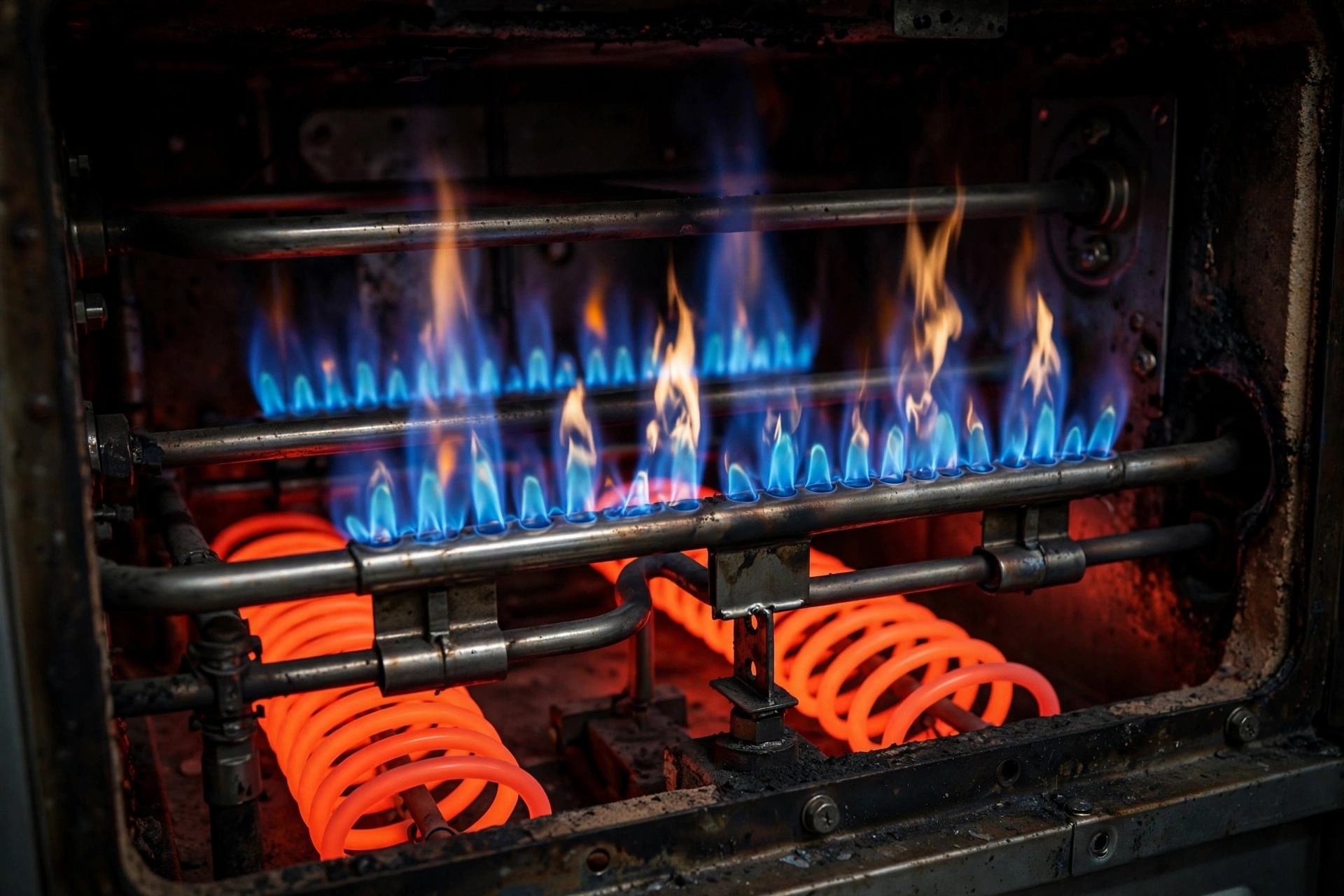
Furnace repair restores safe, even heat by diagnosing the failed part or control, explaining the fault in plai…
Learn more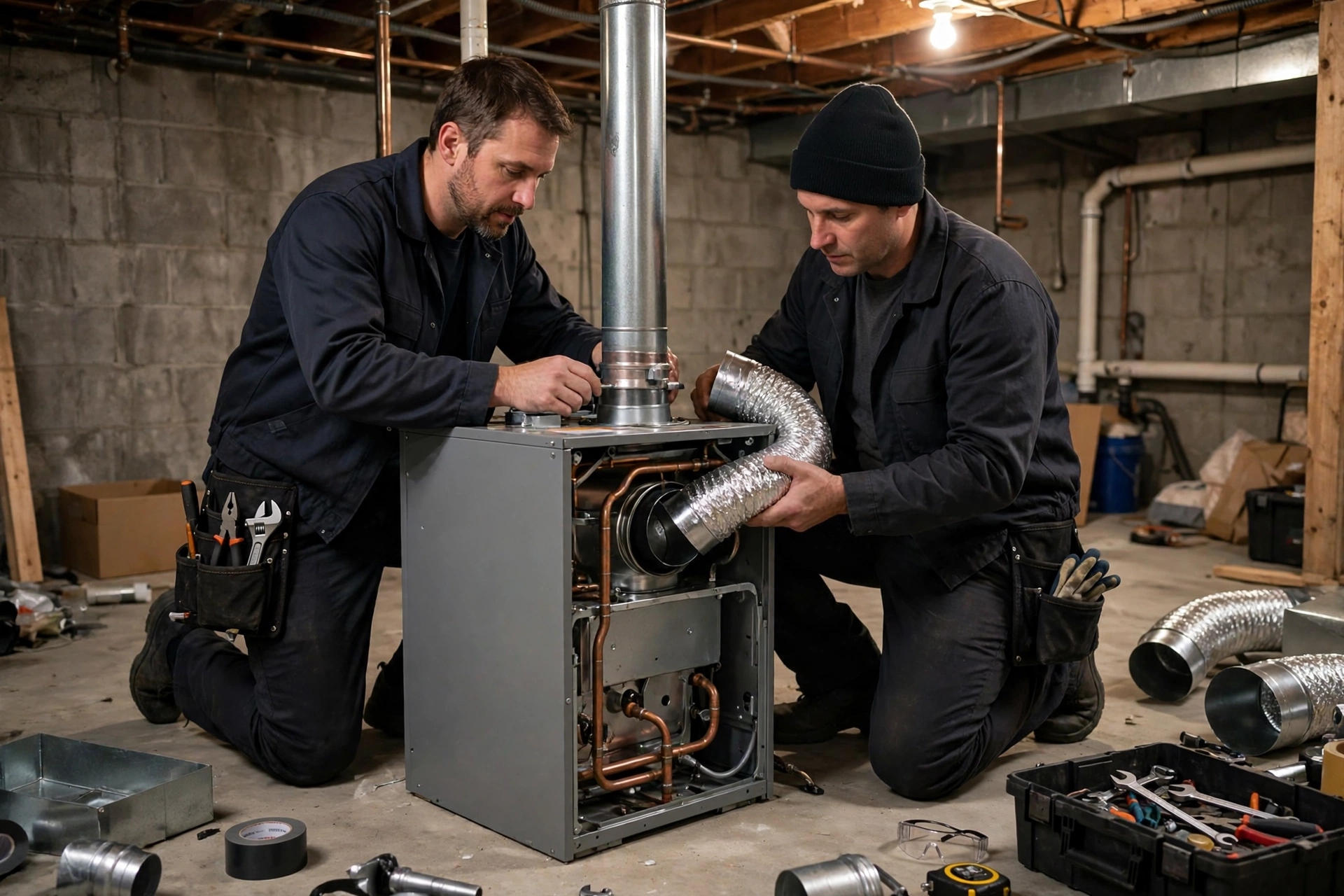
Furnace installation means choosing a system sized to your home and ductwork, removing the old unit safely, an…
Learn more