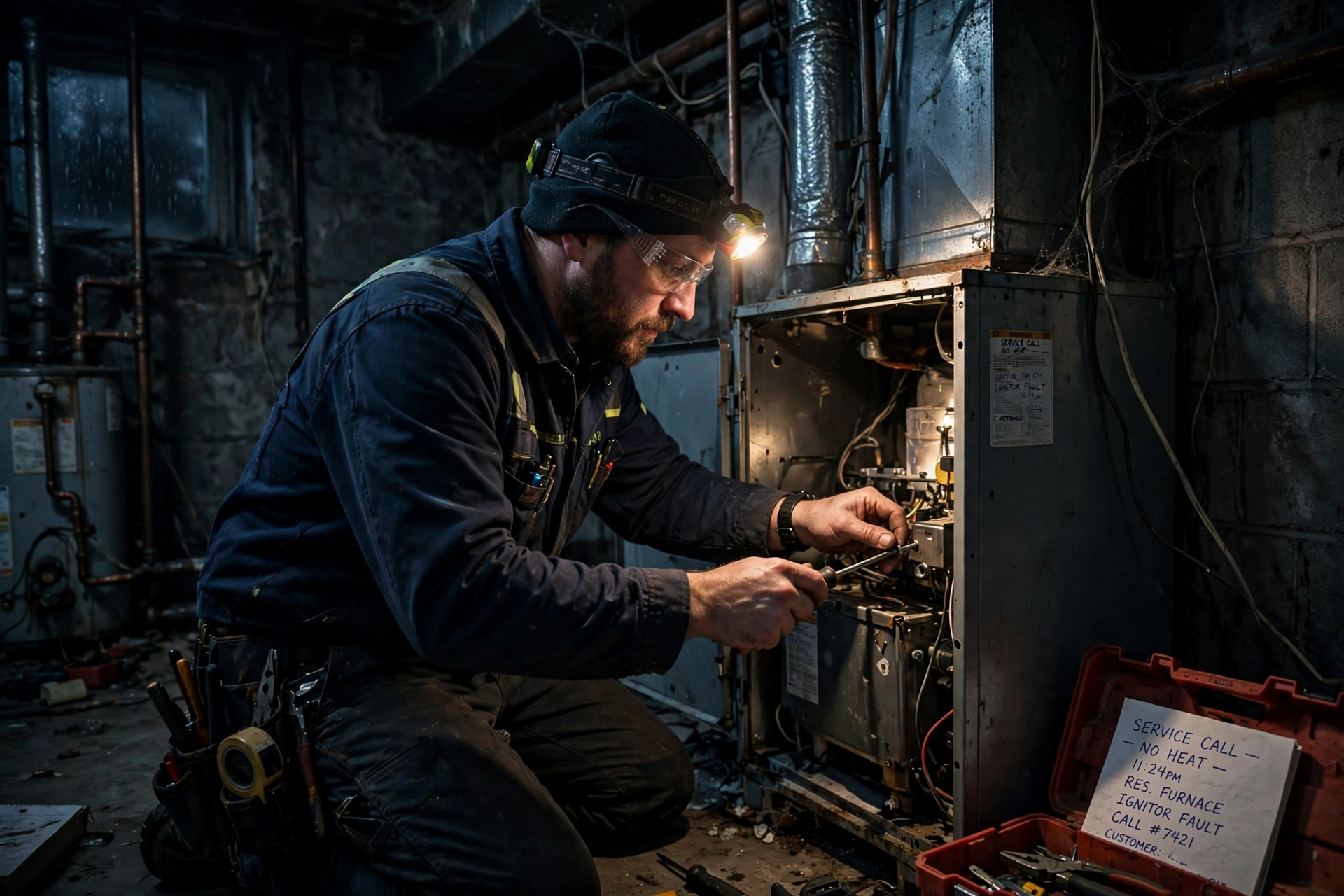
Emergency Furnace Repair
Emergency furnace repair covers a furnace that has stopped heating, is making unsafe sounds, or is showing sig…
Learn moreDuctwork is the hidden half of a heating system. The furnace can produce all the warm air a home needs, but if the ducts leak, disconnect, or crush along the way, that warmth never arrives where it matters. Homeowners often blame the furnace for cold rooms, long heating cycles, or dusty air, when the real fault lies in the delivery system running silently behind walls, above ceilings, and beneath floors.
Delaware homes give ductwork a hard life. Attics swing between summer heat and winter cold, crawl spaces collect humidity, coastal salt air corrodes metal components, and freeze and thaw cycles shift structures enough to stress joints and connections over time. Older homes in Wilmington and Newark often carry original ductwork that has served for decades, while additions and renovations sometimes leave ducts routed awkwardly or sized poorly for the rooms they now serve.
This page explains how duct problems show up, how leaks are found, what repair and sealing involve, and how a repaired duct system improves comfort, air quality, and furnace life. Duct work is unglamorous and invisible, but for many Delaware homes it is the single most effective comfort improvement available.
Cold or weak rooms are the most common duct symptom, and the pattern matters. A room at the end of a long duct run that never warms, a room that heats only when other rooms overheat, or a room whose register barely moves air all point to delivery trouble rather than furnace trouble. When the furnace runs and some registers blow strongly while others barely stir, the ducts are telling you where the problem lives.
Dust and air quality complaints often trace to ducts as well. Leaky return ducts pull air from attics, crawl spaces, and wall cavities, bringing dust, humidity, and odors into the living space along with the air they were supposed to recirculate from rooms. A home that feels dusty despite regular cleaning, or that smells musty when the heat runs, may have return leaks drawing in air from places it should never come from.
Furnace strain is a quieter duct symptom. Leaky or restricted ducts force the furnace to run longer, cycle oddly, or overheat as it tries to compensate for air that escapes before reaching rooms. A furnace repeatedly serviced for airflow or overheating trouble, without any fault found in the unit itself, deserves a duct inspection, because the cause may be outside the furnace cabinet entirely.
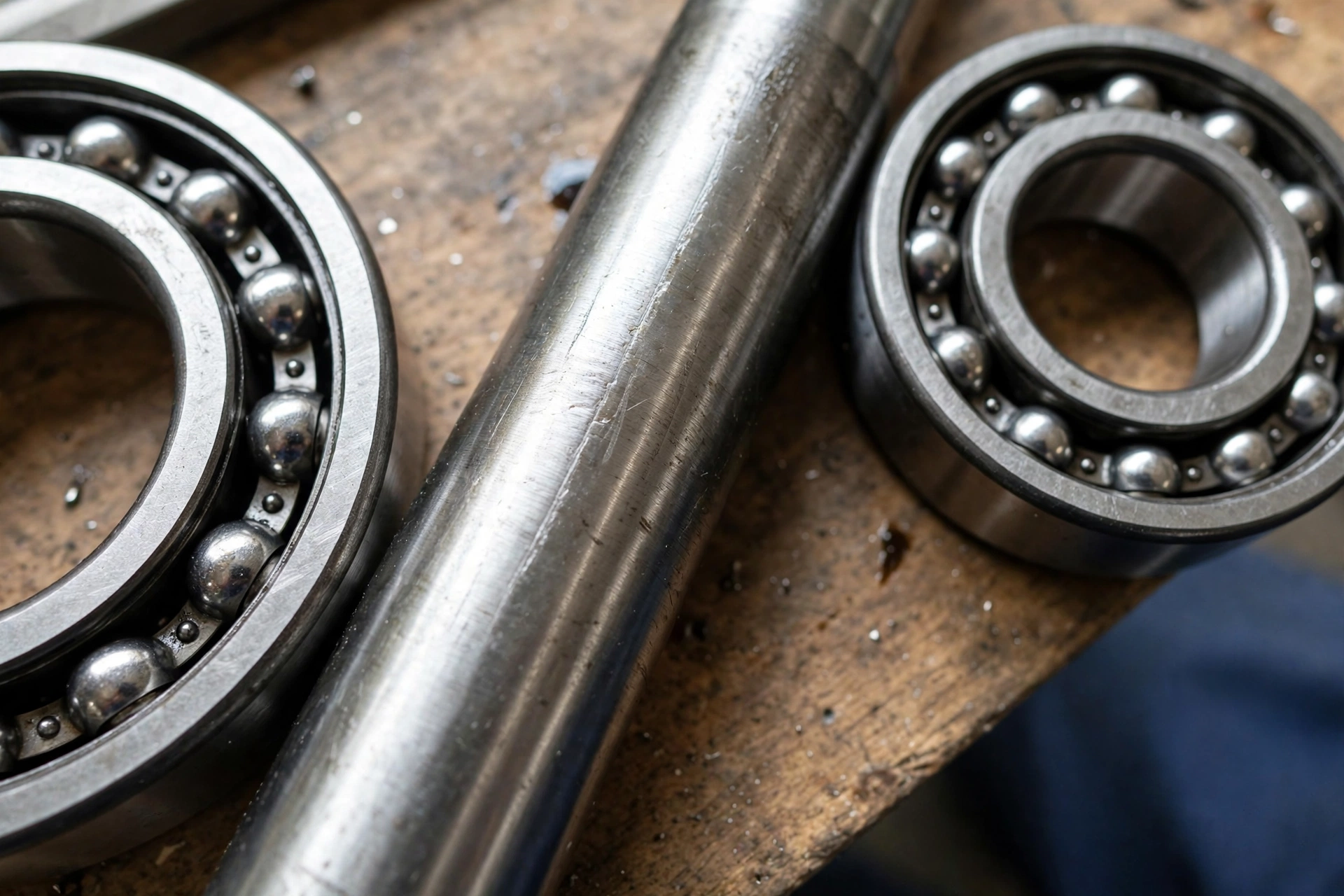
Duct inspection starts with accessible sections: attics, basements, crawl spaces, and utility areas where ducts can be seen and touched. A technician looks for disconnected joints, crushed or kinked flexible ducts, damaged insulation, gaps at connections, and sections showing moisture, rust, or pest damage. Accessible inspection alone often finds the worst leaks, because the joints most likely to fail are also the ones most exposed to temperature swings and movement.
Airflow testing adds precision where eyes cannot reach. By measuring airflow at registers and comparing it with what the furnace produces, a technician can estimate how much air is lost between the furnace and the rooms, and which runs lose the most. Pressure testing and smoke or tracer methods can pinpoint leaks in hidden sections, turning a general suspicion of duct leakage into a specific repair plan.
The inspection should also assess duct design, not just damage. Undersized runs, overly long runs with too many bends, and supply and return imbalance all limit comfort even when every joint is sealed. A duct system that was adequate for the home as originally built may no longer suit a home with additions or changed room use, and recognizing a design limit prevents sealing work from being oversold as a complete fix.
Durable duct sealing starts with proper materials. Mastic sealant, applied thickly over joints and seams and reinforced with mesh where gaps are larger, creates a long lasting airtight bond that flexes with temperature changes. Metal tape rated for ductwork secures connections and insulation, while ordinary household tape has no place in duct sealing because it dries, peels, and fails within seasons.
Joints and connections receive the most attention, because that is where ducts leak most. Every joint between sections, every connection to the furnace plenum, every register boot, and every branch takeoff is inspected and sealed as needed. Sealing the accessible joints thoroughly often recovers a large share of lost airflow, and it is the highest value part of most duct sealing jobs.
Insulation follows sealing where ducts run through unconditioned spaces. Sealed ducts in a cold attic or damp crawl space still lose heat through their walls unless insulated, so insulation is applied or repaired after sealing, not instead of it. Sealing without insulation leaves heat loss in place, and insulation without sealing leaves air loss in place. The two together deliver the comfort improvement homeowners expect.
Some duct problems need repair, not just sealing. Crushed flexible ducts, often from storage piled in an attic or a duct run pressed against framing, must be rerouted or replaced to restore airflow, because no amount of sealing fixes a duct that is physically flattened. Disconnected sections must be reconnected securely and sealed, with supports added so they do not separate again under their own weight or from vibration.
Corroded or damaged metal ducts present a judgment call between section replacement and full run replacement. A single corroded section, often near a damp crawl space or coastal exposure, can be replaced cleanly, while widespread corrosion across many sections may justify replacing a run entirely. A technician should explain which approach fits the damage found, rather than defaulting to the largest possible job.
Duct routing improvements belong in the same conversation when a run is being repaired anyway. A duct that takes a tortuous path with many bends, or that serves a room through an undersized branch, can sometimes be rerouted more directly during repair, improving airflow to a chronically cold room at little extra effort. Repair visits are the best opportunity to fix routing, because the duct is already open and accessible.
Sealing and repair change airflow, so balancing follows the work. With leaks closed, air that previously escaped now reaches rooms, and some rooms may suddenly receive more air than they need while others still lag. Dampers in the duct system, where fitted, are adjusted to distribute air evenly, and register airflow is rechecked room by room until the distribution matches the home's needs.
Balancing is not about making every register blow equally hard. Rooms differ in size, sun exposure, insulation, and use, and a large sunlit living room needs different airflow from a small shaded bedroom. Good balancing accounts for those differences, aiming for even temperatures across rooms rather than equal airflow at every register. Temperature checks in each room after balancing confirm whether the goal was reached.
Homeowners play a role in balancing too. Registers should stay open and unblocked, even in unused rooms, because closing registers raises pressure in the remaining system and can create new leaks or strain the furnace. Furniture, rugs, and drapes over registers quietly undo balancing work, so a quick check of register clearance after duct repairs protects the improvement.
The first benefit homeowners notice after duct sealing is usually comfort: rooms that were cold now warm at similar rates, the furnace cycles more normally, and the home feels steadier through cold nights. That comfort comes from delivery, not from a bigger furnace, and it persists because sealed joints stay sealed when proper materials and methods are used.
Air quality improves alongside comfort, particularly when return leaks are sealed. Air that once came from attics and crawl spaces now comes from living rooms, so dust, humidity, and odors carried in through leaks decline. Households sensitive to dust often notice the change quickly, and the furnace filter stays cleaner longer because it is no longer catching debris drawn in from unconditioned spaces.
Furnace life benefits quietly over seasons. A furnace that no longer runs long cycles to compensate for lost air, no longer overheats from restricted or leaking ducts, and no longer strains its blower against a damaged system will last longer and need fewer airflow related repairs. Duct sealing is often framed as a comfort project, but for the furnace it is a longevity project too, and that combined payoff makes it one of the wisest investments in home heating.
Describe what your system is doing and we will help arrange the next step.
Cold rooms, weak registers, excess dust, musty odors when heat runs, and a furnace that runs long cycles without a unit fault all suggest duct leakage. Inspection and airflow testing confirm it.
No. Ordinary tape dries and peels within seasons. Durable sealing uses mastic sealant and duct rated metal tape applied to joints, seams, and connections.
Yes, after sealing. Insulation prevents heat loss through duct walls in unconditioned spaces, while sealing prevents air loss through joints. Both are needed for full benefit.
Often yes, especially when that room's duct run is leaking, disconnected, or crushed. If the run is undersized or poorly routed, repair or rerouting may be needed alongside sealing.
No. Closing registers raises pressure in the remaining system, which can create new leaks and strain the furnace. Keep registers open and unblocked for balanced airflow.
A duct inspection during furnace maintenance, or whenever cold rooms, dust, or furnace strain appear, is a sensible rhythm. Accessible ducts can also be checked visually each year.
Not seeing your question? Request service and describe what your system is doing.
Get Duct Repair HelpEmergency furnace repair covers a furnace that has stopped heating, is making unsafe sounds, or is showing sig…
Learn more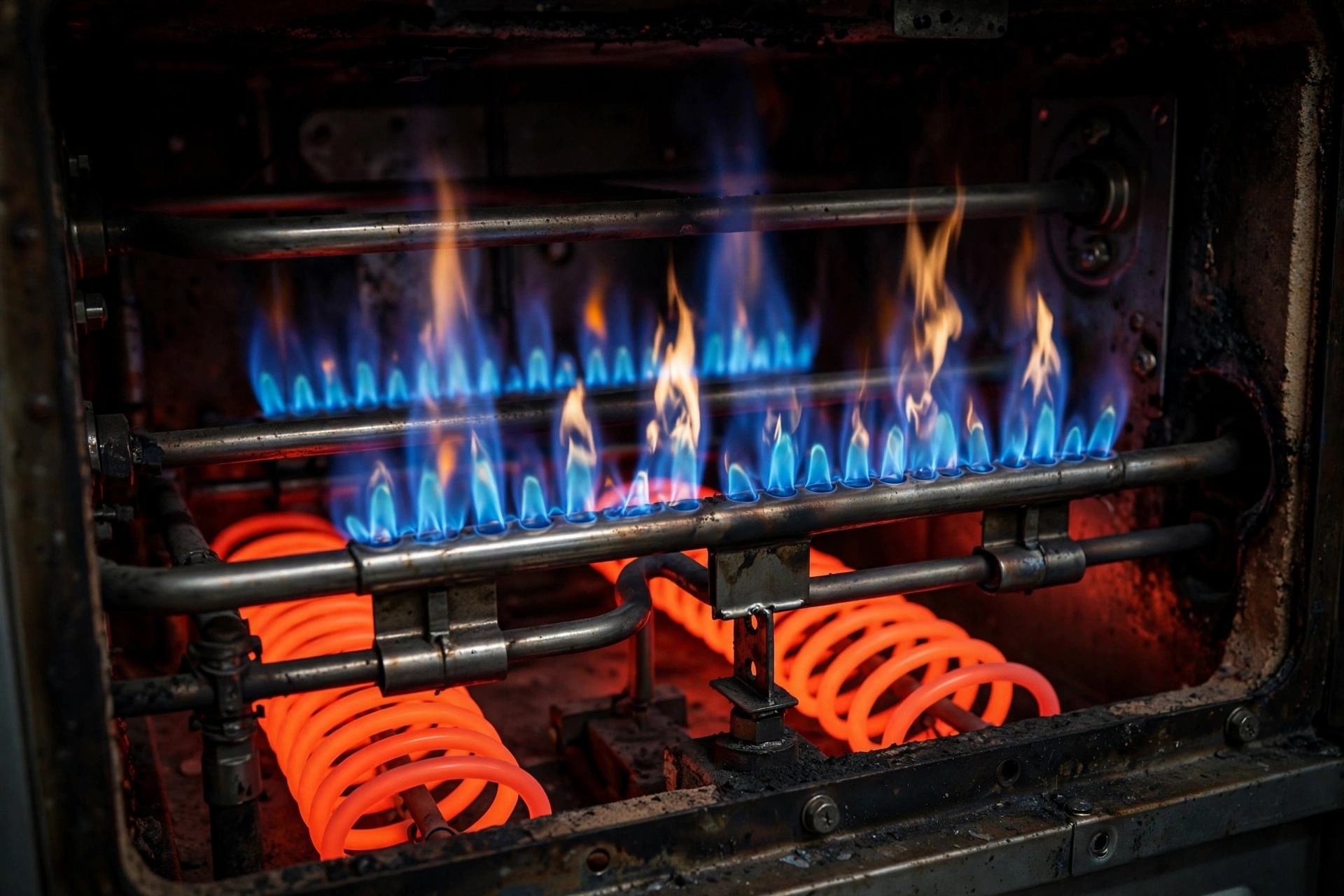
Furnace repair restores safe, even heat by diagnosing the failed part or control, explaining the fault in plai…
Learn more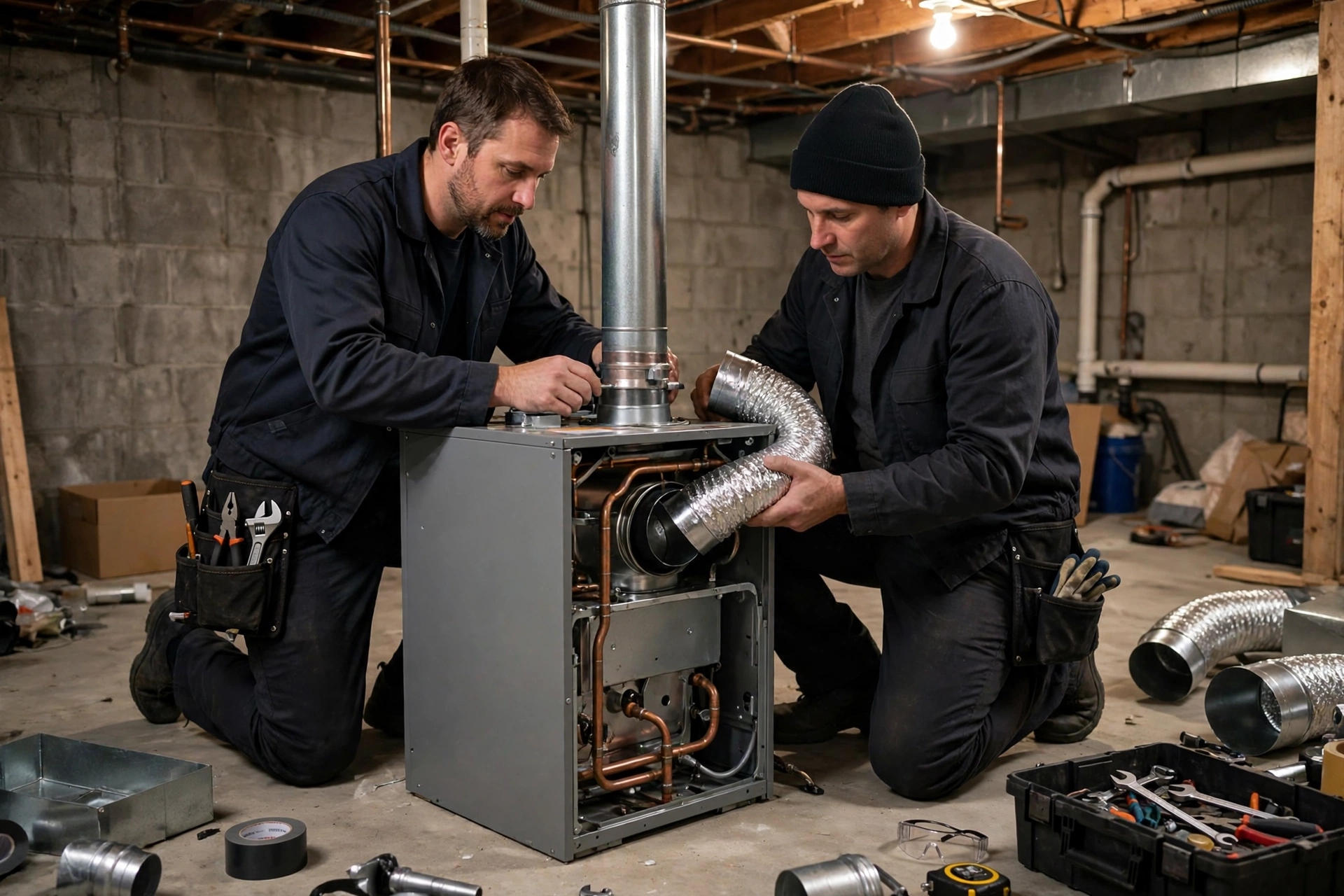
Furnace installation means choosing a system sized to your home and ductwork, removing the old unit safely, an…
Learn more