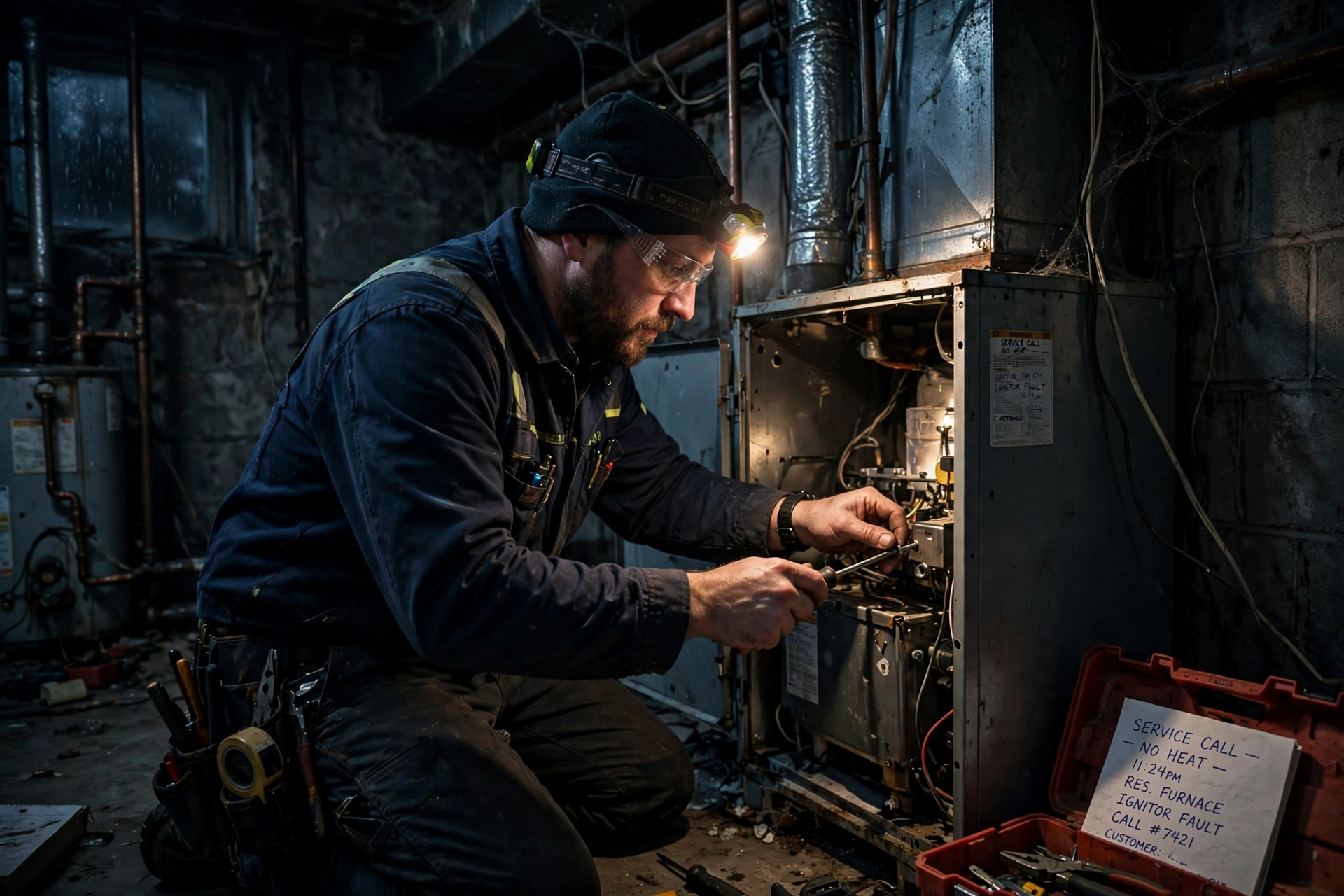
Emergency Furnace Repair
Emergency furnace repair covers a furnace that has stopped heating, is making unsafe sounds, or is showing sig…
Learn moreBoilers heat differently from furnaces, and they fail differently too. Instead of blowing warm air through ducts, a boiler heats water and sends it through radiators, baseboards, or radiant floors, and that water based system brings its own set of components: pumps, valves, expansion tanks, pressure controls, and piping that must all work together. When one link in that chain falters, the symptom may be a cold radiator in one room, a boiler that cycles oddly, or a system that loses pressure overnight.
Delaware has many homes heated by boilers, particularly older homes in Wilmington and Newark where radiators and baseboard systems were original equipment, and those systems often carry decades of service history. Age brings both character and wear: older piping corrodes, valves stick, pumps weaken, and controls drift, while freeze and thaw cycles and coastal humidity add their own stress to pipes and components. A boiler that has heated a home for many seasons deserves repair work that respects how the whole system fits together.
Delaware Furnace Pros approaches boiler repair as system diagnosis, not isolated part swapping. This page covers the most common boiler complaints, how diagnosis works on a water based system, what a repair visit involves, and how to keep a repaired boiler running steadily. The goal is the quiet, even warmth that a healthy boiler is known for, restored room by room.
When a boiler produces no heat at all, diagnosis starts with the basics: power supply, thermostat signal, and whether the boiler is attempting to fire. A boiler that does not attempt to fire may have a control, ignition, or power problem, while a boiler that fires but sends no heat may have a pump, valve, or air problem downstream. Distinguishing those two situations early saves time and points the repair in the right direction.
The thermostat chain matters more on boiler systems than many homeowners expect, because many older homes have a single thermostat controlling the whole house, and a fault there leaves every radiator cold. Zone valves add another layer: a home with multiple zones can lose heat in one zone while others work fine, which points directly to a valve, thermostat, or control problem for that zone rather than a boiler failure.
Fuel and ignition problems round out the no heat picture. A gas boiler that will not ignite may have an ignitor, flame sensing, or gas supply issue, while an oil boiler that will not fire may have a burner, nozzle, or fuel delivery problem. Whatever the fuel, the repair principle is the same: confirm the boiler can fire safely, then trace why heat is not reaching the rooms.
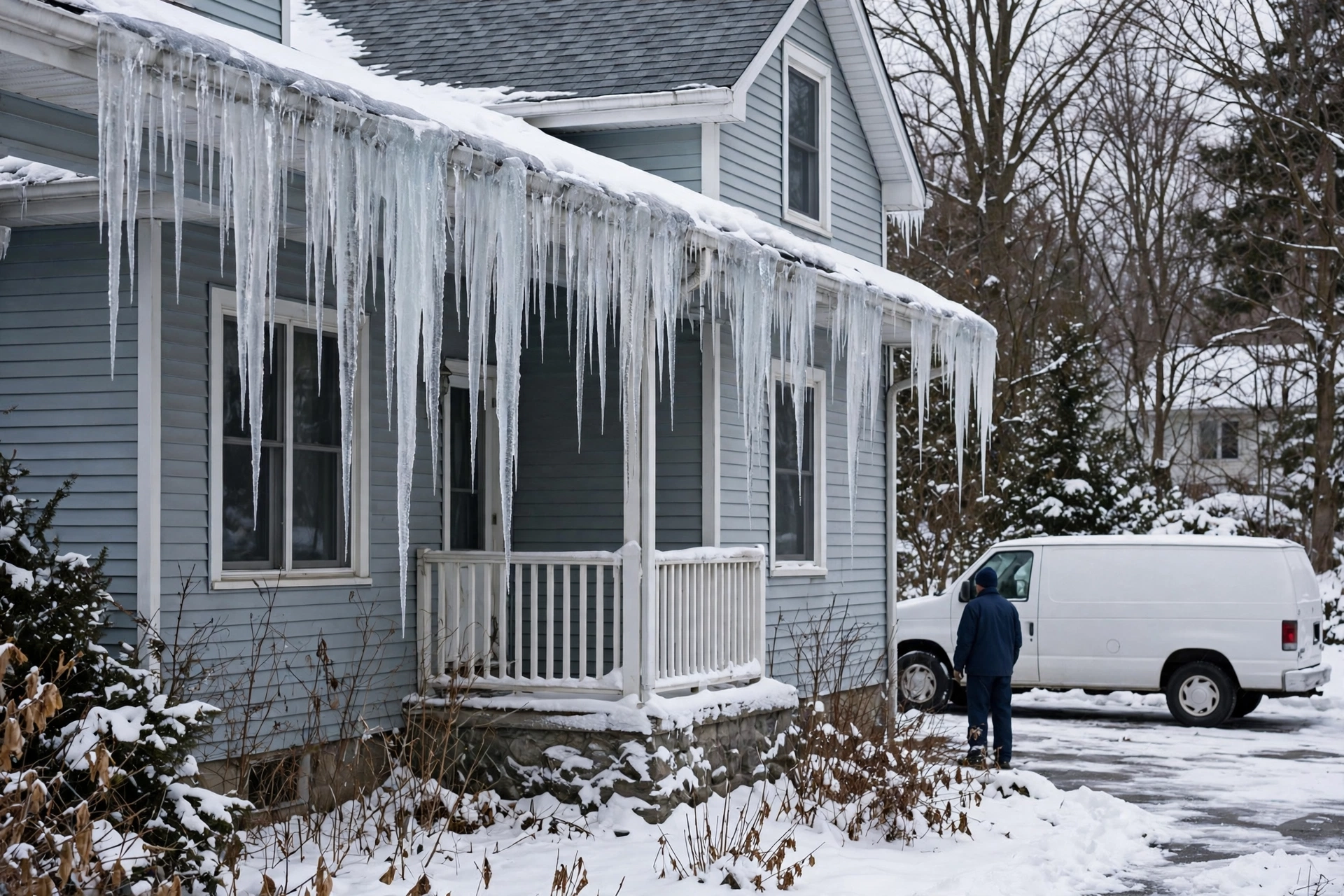
Uneven heat is the most common boiler complaint that is not a complete breakdown, and it usually has a specific, findable cause. Air trapped in radiators or piping is a frequent culprit, because air blocks water flow and leaves the top of a radiator cold while the bottom warms. Bleeding radiators releases trapped air, but recurring air in the system points to a deeper issue, such as a faulty air vent or a leak drawing air in, that should be addressed rather than bled repeatedly.
Zone and valve problems produce a different pattern: one room or one floor stays cold while the rest of the house heats normally. A stuck zone valve, a failed zone thermostat, or a circulator pump serving one zone can all create that pattern, and diagnosis focuses on the zone that is cold rather than the boiler as a whole. In older Delaware homes where zones were added over time, the zone layout itself sometimes needs explanation before the fault becomes clear.
Sludge and scale buildup inside radiators and piping restrict flow gradually, so heat fades over seasons rather than disappearing overnight. A radiator that warms only at the bottom, or a baseboard section that stays cool while its neighbors heat, may be partially blocked internally. Flushing or cleaning the affected section, and addressing the water quality or corrosion that caused the buildup, restores flow more durably than simply turning the thermostat up.
Leaks demand prompt attention on a boiler system, because lost water lowers pressure, introduces air, and accelerates corrosion inside the system. A leak at a valve, fitting, pump seal, or radiator connection may start as a small drip and grow steadily, and the longer it runs, the more water the system loses and the more air it draws in. Finding the source matters more than topping up pressure, because topping up without fixing the leak only repeats the cycle.
Pressure that keeps rising points to a different fault, often an expansion tank that has lost its air charge or a fill valve that is letting in too much water. A boiler running at excessive pressure will relieve itself through its safety valve, which is the valve doing its job, but the underlying cause still needs repair. Pressure that keeps falling, on the other hand, usually means water is leaving the system somewhere, and the leak hunt begins.
Homeowners should never ignore a safety valve that discharges repeatedly, a pressure gauge that reads far outside its normal range, or water pooling near the boiler. Those are signals that the system needs professional attention promptly, not at the next scheduled visit. A technician will test the expansion tank, fill valve, pressure relief valve, and accessible piping to find the cause and restore stable pressure.
Boilers should run quietly, so new noises are useful diagnostic clues. Banging or kettling often comes from scale buildup on the heat exchanger, where trapped steam bubbles collapse noisily, or from air and water hammer in piping. Gurgling usually means air is moving through radiators or pipes, while whistling can point to a valve, pump, or flow restriction forcing water through a narrow opening.
Noise diagnosis starts by locating the sound: at the boiler itself, at a particular radiator, or along a pipe run. A noise at the boiler points to the heat exchanger, burner, or pump, while a noise at one radiator points to air or a valve in that radiator. That location work matters, because treating the whole system for a localized problem wastes effort and may miss the real fault.
Some boiler noises are harmless in the short term but still worth reporting, because they often precede a larger problem. A pump that is beginning to whine, a valve that chatters, or a heat exchanger that kettles occasionally are all early warnings. Addressing them during a repair visit, rather than waiting for failure, keeps the boiler quiet and the repair small.
A boiler repair visit begins with a conversation about symptoms: which rooms are affected, when the problem started, whether pressure or temperature readings have changed, and whether any leaks or noises have appeared. Those details narrow the diagnosis considerably on a water based system, where the same symptom can arise from several different components and the pattern of affected rooms is often the best clue.
Inspection and testing follow the symptom pattern. The technician checks boiler controls, ignition and burner operation, pump function, zone valves, expansion tank pressure, system pressure, and accessible piping and radiators. Water temperature, pressure behavior through a heating cycle, and heat at each radiator or baseboard section are all observed, because a boiler that looks fine at rest may show its fault only under load.
Repairs are explained before they begin, including what failed, why it likely failed, and whether related components show wear worth addressing at the same visit. After the repair, the system is run through full cycles, radiators are checked for even heat, pressure is confirmed stable, and any air is bled from the system. The visit ends when the boiler heats steadily and quietly, not merely when it turns on.
After a repair, a few habits keep a boiler steady. Watch system pressure over the following days, since a stable reading confirms the repair held, while a drifting reading suggests a remaining leak or valve issue worth reporting promptly. Bleed radiators that develop cold spots, but report radiators that need bleeding repeatedly, because that pattern signals air entering the system somewhere.
Annual boiler maintenance complements repair work by inspecting the burner, heat exchanger, controls, pumps, valves, and expansion tank before heating season, and by catching corrosion or wear while it is still minor. Delaware winters reward that rhythm, because a boiler failure in January leaves a home cooling with no quick alternative heat source, while a fault found in autumn is a scheduled repair.
Finally, keep the boiler area clear, dry, and accessible, and report leaks, new noises, or pressure changes promptly rather than waiting for the next visit. Boilers reward attention: a system whose owner notices small changes early is a system that rarely surprises anyone in midwinter. That steady, quiet reliability is what a well repaired boiler should deliver, season after season.
Describe what your system is doing and we will help arrange the next step.
Trapped air, a stuck valve, or restricted flow in that radiator are the usual causes. Bleeding the radiator may help, but a radiator that keeps going cold needs professional diagnosis.
Note where the water is coming from, avoid touching electrical components near the water, and request service promptly. Topping up pressure without fixing the leak only repeats the problem.
Falling pressure usually means water is leaving the system through a leak, a faulty valve, or a radiator connection. A technician traces the loss to its source rather than just refilling the system.
Banging can come from scale, air, or water hammer, and while it is not always an emergency, it should be inspected promptly because it often signals a developing problem in the heat exchanger or piping.
Boilers heat water sent through radiators or baseboards, so diagnosis covers pumps, zone valves, expansion tanks, and piping in addition to burners and controls, while furnaces focus on airflow and ductwork.
Once a year, ideally before heating season, so the burner, controls, pumps, valves, and expansion tank are inspected and tested while repairs can still be planned calmly.
Not seeing your question? Request service and describe what your system is doing.
Get Boiler Repair HelpEmergency furnace repair covers a furnace that has stopped heating, is making unsafe sounds, or is showing sig…
Learn more
Furnace repair restores safe, even heat by diagnosing the failed part or control, explaining the fault in plai…
Learn more
Furnace installation means choosing a system sized to your home and ductwork, removing the old unit safely, an…
Learn more